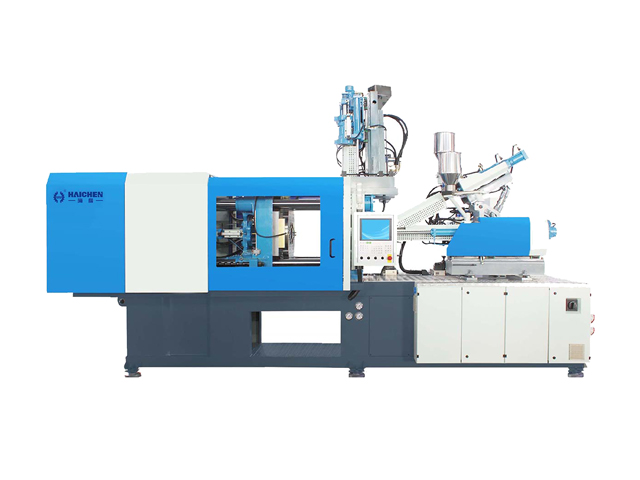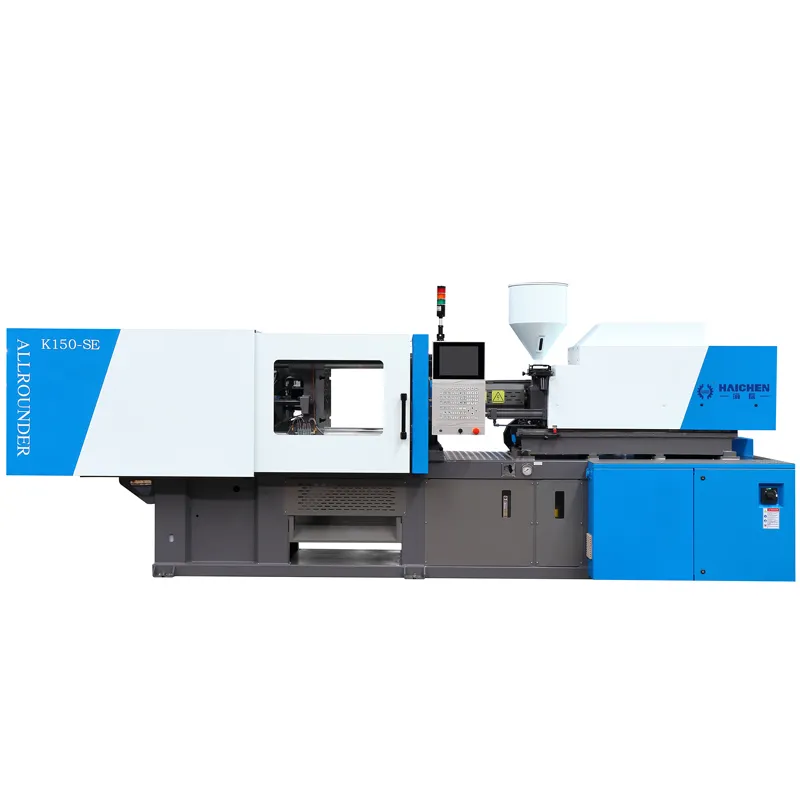
PLA injection molding differs fundamentally from processing PP, ABS, or PE. PLA degrades when barrel temperatures exceed 180°C for more than five minutes. Its melt does not shear-thin, meaning high injection speeds destroy molecular chains instead of improving flow. The material corrodes standard nitrided screws, shortening equipment life to one-third of conventional plastic conditions. A machine that works well for PP will fail with PLA unless the screw design, temperature control, and shot capacity all match PLA’s narrow processing window.
Choose a PLA injection molding machine by verifying four parameters: screw L/D ratio of 20:1–22:1 with low-shear design, barrel temperature control within 145–175°C, shot capacity where full shot is at least 50% of barrel capacity, and corrosion-resistant screw/barrel construction. PLA requires drying to below 250 ppm moisture at 80°C for 4 hours.
This guide provides the selection criteria, calculation formulas, PLA-specific processing parameters, and common defect solutions for building a reliable PLA production line.
Why Does PLA Require a Different Machine Configuration Than Conventional Plastics
PLA degrades above 180°C, does not shear-thin under high injection speeds, and corrodes standard nitrided screws. These three characteristics demand a low-shear screw, precise multi-zone temperature control within ±1°C, and corrosion-resistant screw/barrel materials.
The Three PLA Processing Challenges
| Challenge | Root Cause | Machine Design Impact |
|---|---|---|
| Narrow thermal window | Degradation above 180°C | Precise temperature control (±1°C) |
| Shear sensitivity | No shear-thinning behavior | Low-shear screw, low RPM, moderate injection speed |
| Corrosive melt | Acidic residue plates out over time | Corrosion-resistant screw and barrel (bimetallic or hard chrome) |
PLA’s processing window is only 145–160°C at the melt stage. Exceeding this window causes thermal degradation. A temperature deviation of just 5°C can drop yield from 92% to 58%. The machine must maintain precise temperature control across all barrel zones, and the screw must minimize shear heating during plasticization.
PLA’s acidic residue plates out of the material over time, corroding hot runners, nozzles, and screws that lack protective surfaces. Hot runner systems for PLA should use corrosion-free materials throughout.
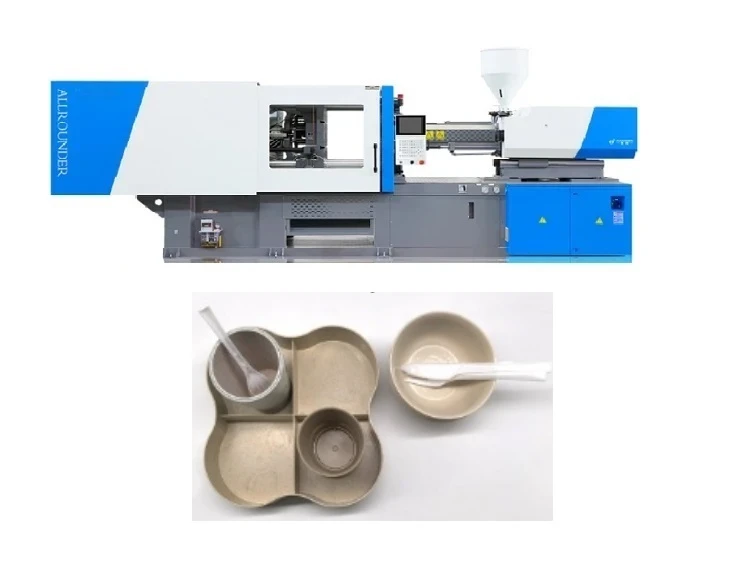
What Screw Design Is Required for PLA Injection Molding?
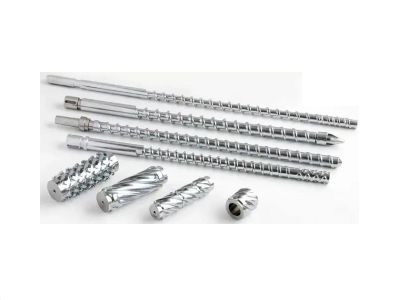
PLA injection molding requires a low-shear screw with L/D ratio of 20:1–22:1 and compression ratio of 2.5:1–3.0:1. The screw should have a gradual transition zone, generous flight depth in the feed section, and corrosion-resistant surface treatment (bimetallic or hard chrome).
Screw Parameters for PLA
| Parameter | Recommended Range | Why |
|---|---|---|
| L/D ratio | 20:1–22:1 | Sufficient melting length without excessive residence time |
| Compression ratio | 2.5:1–3.0:1 | Moderate compression; too high generates shear heat |
| Feed section depth | >6 mm | Handles low bulk density of PLA pellets |
| Surface treatment | Bimetallic or hard chrome | Resists acidic corrosion |
| Screw speed | 50–100 rpm | Low speed minimizes shear heating |
PLA does not shear-thin like PP or PE. At high screw speeds, PLA’s molecular chains break instead of aligning for better flow. The screw must plasticize material gently, using a gradual compression transition rather than a sharp one.
Why Standard Nitrided Screws Fail with PLA
A standard nitrided screw may show corrosion pitting within 3–6 months of PLA processing. The acidic residue that plates out of PLA attacks the nitrided surface layer. Once the surface breaks down, the screw loses dimensional accuracy and plasticizing consistency. Bimetallic screws (alloy steel base with corrosion-resistant liner) or hard chrome-plated screws resist this attack and maintain performance over years of production.
What Temperature Control Precision Does PLA Require?
PLA requires barrel temperature control within ±1°C across all zones. Recommended settings: feed zone 145–155°C, compression zone 155–165°C, metering zone 160–170°C, nozzle 165–175°C. The machine must maintain these temperatures during continuous production without drift.
Recommended PLA Temperature Profile
| Zone | Recommended Range | Notes |
|---|---|---|
| Feed zone | 145–155°C | Below PLA melting point to prevent bridging |
| Compression zone | 155–165°C | Gradual melting; avoid sudden shear |
| Metering zone | 160–170°C | Final melt homogenization |
| Nozzle | 165–175°C | Slightly above metering zone |
| Mold temperature | 25–50°C | Lower mold temp for faster crystallization control |
PLA’s melt temperature is typically 145–155°C. The barrel temperature gradient should rise gradually from feed to nozzle, avoiding any zone that exceeds 180°C. NatureWorks recommends a temperature profile of 160-165-165-170°C from hopper to nozzle for PLA injection molding.
The machine’s temperature control system must maintain ±1°C accuracy. Overshoot of 5–10°C during startup or production transitions causes visible yellowing and measurable strength loss. Look for machines with PID temperature control and independent fan cooling for each barrel zone.
Mold Temperature Considerations
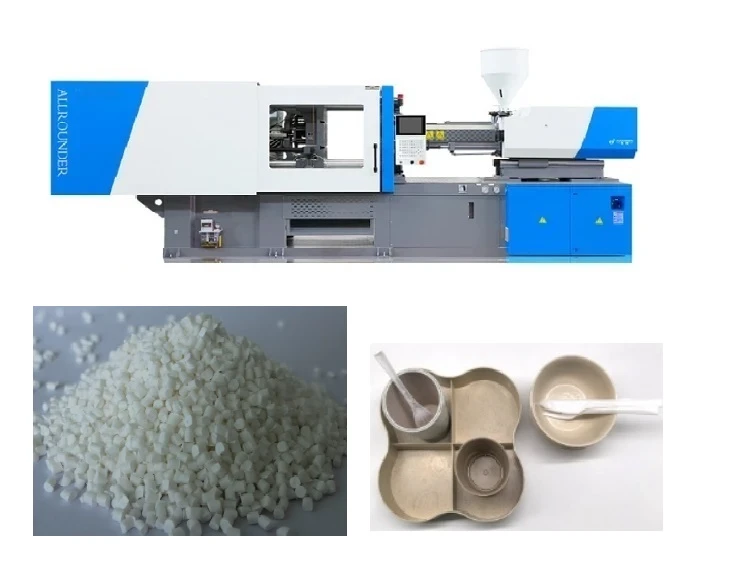
PLA mold temperature should be controlled at 25–50°C. Lower mold temperatures accelerate part solidification but may cause insufficient crystallinity. Higher mold temperatures improve surface finish but extend cycle time. A mold temperature controller with ±1°C accuracy is essential for consistent PLA production.
How Do You Calculate Shot Capacity for PLA Molds?
Full shot capacity (part weight + runner) should be at least 50% of the machine’s barrel capacity for PLA. Shots below 50% cause excessive residence time and thermal degradation. For a 16-cavity PLA cutlery mold with 5g parts and 8g runner, total shot is 88g, so the machine should have barrel capacity ≤176g.
Shot Capacity Calculation
Minimum Barrel Capacity = Total Shot Weight ÷ 0.50
PLA requires that the full shot (parts + runner + hot runner volume) be at least 50% of the barrel capacity. This ensures the material does not remain in the barrel too long between cycles. Residence time above 5 minutes at 180°C+ causes molecular breakdown.
Worked example: A 16-cavity PLA spoon mold with 5g parts and 8g runner:
Total shot weight = (5 × 16) + 8 = 88 g
Maximum barrel capacity = 88 ÷ 0.50 = 176 g
Recommended machine shot weight (PS): 88–176 g
For PLA, use the lower end of the machine’s shot capacity range to minimize residence time. A machine rated for 150–200g PS shot weight would be suitable for this mold.
Drying Requirements Before Processing
PLA must be dried to a maximum moisture content of 250 ppm before processing. Typical drying conditions are 80°C for 4 hours with a dew point below -40°C. Drying below 60°C is ineffective; drying above 90°C may cause pellet sticking. A desiccant dryer with dew point monitoring is required — standard hot air dryers cannot achieve the -40°C dew point needed for PLA.
What Injection Parameters Work Best for PLA?
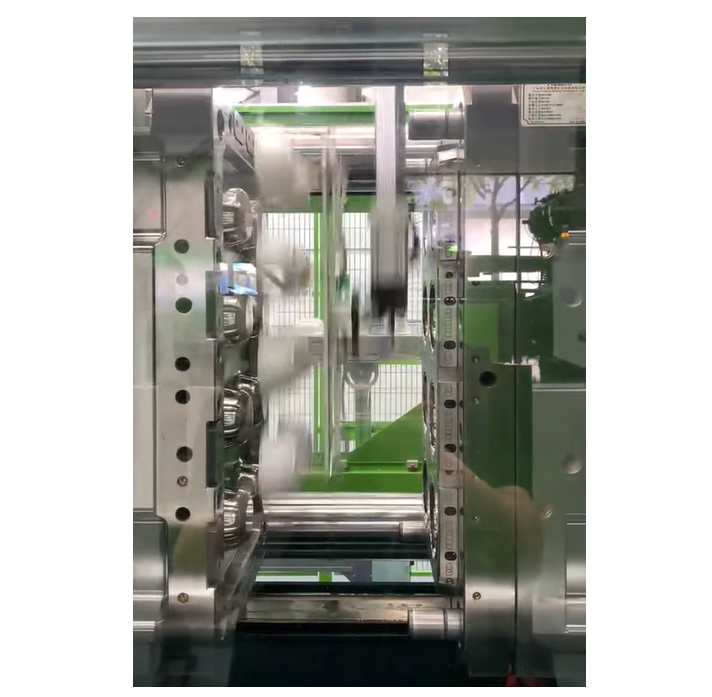
PLA processes at moderate injection speeds (40–80 cm³/s) with low holding pressure (40–60 MPa) and low back pressure (5–15 MPa). High injection speeds cause shear degradation. Holding time of 10–15 seconds and cooling time of 15–25 seconds are typical for PLA parts.
Recommended PLA Injection Parameters
| Parameter | Recommended Range | Notes |
|---|---|---|
| Injection speed | 40–80 cm³/s | Moderate; avoid high shear |
| Injection pressure | 60–100 MPa | Lower than ABS |
| Holding pressure | 40–60 MPa | 50–70% of injection pressure |
| Back pressure | 5–15 MPa | Low to minimize shear heat |
| Holding time | 10–15 s | Until gate seals |
| Cooling time | 15–25 s | Longer than PP due to slow heat dissipation |
| Screw speed | 50–100 rpm | Low to moderate |
Research on PLA injection molding shows that setting injection speed to 40 cm³/s and injection pressure to 54 bar significantly reduces shrinkage defects in PLA parts. PLA flows better at slow velocities and low pressures, maintaining material integrity.
Common Defects and Solutions
| Defect | Cause | Solution |
|---|---|---|
| Yellowing and brittleness | Thermal degradation (barrel temp >180°C, residence time >5 min) | Lower barrel temperature by 5–10°C; reduce residence time; use smaller shot capacity machine |
| Silver streaks and bubbles | Moisture in resin | Dry PLA at 80°C for 4 hours to <250 ppm moisture |
| Short shots | Low mold temperature or insufficient injection pressure | Increase mold temperature to 30–50°C; increase injection pressure moderately |
| Warpage | Uneven cooling | Balance cooling channels; ensure mold temperature uniformity within ±2°C |
| Gate blush and high vestige | High shear at gate | Use fan gate or film gate; avoid pinpoint gates |
| Sink marks | Insufficient holding pressure or time | Increase holding pressure to 50–60 MPa; extend holding time |
How Do You Evaluate a PLA Injection Machine Supplier?
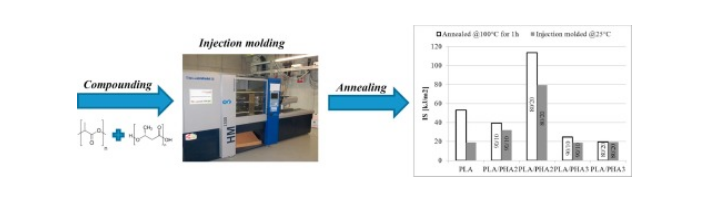
Evaluate suppliers on four criteria: PLA-specific screw design (low-shear, corrosion-resistant), documented processing parameters for PLA (temperature profiles, drying conditions), machine sizing logic (shot capacity ≥50% of barrel for PLA), and after-sales support for process optimization.
Supplier Evaluation Checklist
| Evaluation Area | What to Verify | Red Flag |
|---|---|---|
| Screw design | Low-shear, L/D 20:1–22:1, bimetallic or hard chrome surface | Standard nitrided screw |
| Temperature control | ±1°C accuracy, independent zone control | ±5°C or higher |
| Shot capacity logic | Recommends shot ≥50% of barrel for PLA | Does not consider residence time |
| PLA processing data | Documented temperature profiles and drying conditions for PLA | Generic settings only |
| Drying equipment | Desiccant dryer with -40°C dew point capability | Hot air dryer only |
| Corrosion protection | Bimetallic barrel, chrome-plated nozzle, corrosion-free hot runner | Standard components |
FAQ
What screw L/D ratio is recommended for PLA injection molding?
PLA injection molding requires a screw L/D ratio of 20:1–22:1 with a low-shear design. The compression ratio should be 2.5:1–3.0:1. A standard general-purpose screw with higher compression ratio generates excessive shear heat and causes PLA degradation.
What temperature should PLA be processed at?
PLA processing temperatures typically range from 145–175°C for the barrel, with the feed zone at 145–155°C and the nozzle at 165–175°C. Exceeding 180°C for more than 5 minutes causes thermal degradation. Mold temperature should be controlled at 25–50°C.
Why does PLA require drying before injection molding?
PLA absorbs moisture from the air. Moisture above 250 ppm causes hydrolysis during processing, breaking polymer chains and creating silver streaks, bubbles, and reduced mechanical strength. Dry PLA at 80°C for 4 hours with a dew point below -40°C.
What shot capacity should a PLA injection molding machine have?
The full shot weight (parts + runner) should be at least 50% of the machine’s barrel capacity. Shots below 50% cause excessive residence time and thermal degradation. For a 16-cavity mold with 88g total shot, the machine barrel capacity should be 176g or less.
What causes yellowing in PLA injection molding?
Yellowing indicates thermal degradation from excessive barrel temperature or long residence time. PLA breaks down at temperatures above 180°C or residence times above 5 minutes. Solutions include lowering barrel temperature, reducing screw speed, and using a machine with smaller shot capacity.
Can PLA be molded on a standard injection molding machine?
PLA can be molded on a standard machine with modifications: a low-shear screw with corrosion-resistant surface, precise temperature control (±1°C), and proper shot sizing (≥50% of barrel). Without these modifications, standard machines produce degraded parts and corrode quickly.
What is the cycle time for PLA injection molding?
PLA cycle times range from 15–30 seconds for small parts, longer than PP or ABS due to PLA’s slower heat dissipation. Cooling time alone may require 15–25 seconds. Cycle time depends on wall thickness, mold temperature, and part geometry.