
PLA (polylactic acid) is a bio-based and biodegradable material. Manufacturers produce it from renewable resources like corn starch and sugarcane. Global demand for environmentally friendly materials is growing, and PLA applications are expanding.
PLA injection molding differs greatly from traditional plastics. What is PLA material? It is a thermoplastic polyester with unique processing requirements. Material PLA has a narrow processing window and high sensitivity to moisture and heat. Incorrect processing leads to brittle parts, discoloration, and reduced strength.
This article explains the key properties of PLA material and the essential process parameters for injection molding. The content targets technical personnel and production managers at PLA product manufacturers.
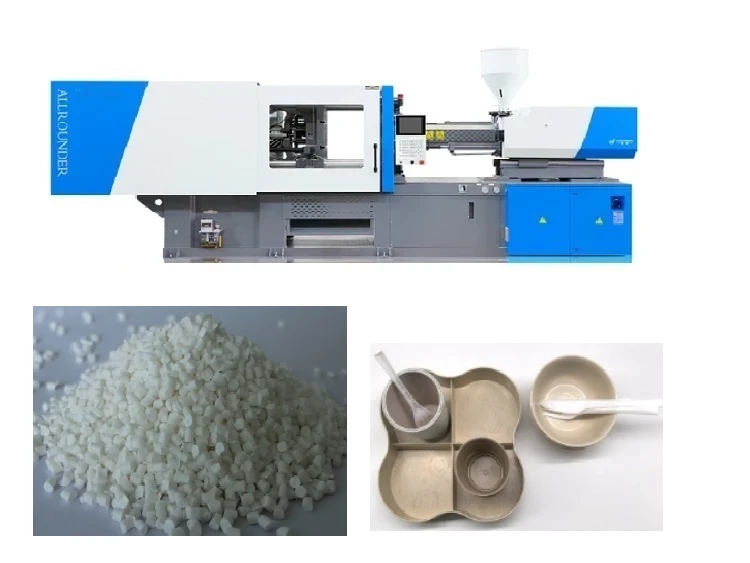
Basic Physical and Chemical Properties of PLA material
What are the key properties of PLA material?
PLA material is a thermoplastic polyester made from renewable resources. It has a melting point of 160-180°C, a glass transition temperature of 55-65°C, and a density of 1.24 g/cm³. PLA is biodegradable, compostable, and has mechanical properties similar to PET. It requires drying to below 0.02% moisture before processing.
Chemical Composition and Sources
PLA is a thermoplastic polyester. Manufacturers produce it through fermentation of plant starch (mainly corn) to create lactic acid, followed by polymerization.
PLA is a bio-based material. It is fully biodegradable and decomposes into carbon dioxide and water under industrial composting conditions. This makes it suitable for food packaging, disposable tableware, and daily-use products.
The molecular weight of commercial PLA typically ranges from 100,000 to 300,000 g/mol. Higher molecular weight PLA has better mechanical properties but poorer melt flow. This can cause filling issues in thin-wall products.
Thermal Properties
The glass transition temperature (Tg) of PLA is about 55-65°C. This is the temperature at which the material begins to soften. Amorphous PLA deforms above 60°C.
The melting temperature range of PLA is 160-180°C. Its processing window is narrow. The material is sensitive to temperature fluctuations.
Crystallinity is a key factor affecting PLA thermal performance. The heat deflection temperature (HDT) of amorphous PLA is only 55-65°C. Fully crystallized PLA (crystallinity exceeding 40%) can achieve HDT of 100-131°C .
Research shows that adding nucleating agents and optimizing injection molding conditions can raise PLA’s HDT from 58°C to 100-131°C . This makes it suitable for hot-fill and reheatable food packaging applications.
Mechanical Properties
PLA mechanical properties are comparable to PET. Typical property data for injection-molded PLA includes:
-
Tensile strength: approximately 45 MPa
-
Elongation at break: up to 300%
-
Flexural strength: approximately 65 MPa
-
Flexural modulus: approximately 2400 MPa
-
Notched impact strength: approximately 30 kJ/m² (at 23°C)
-
Density: 1.24 g/cm³
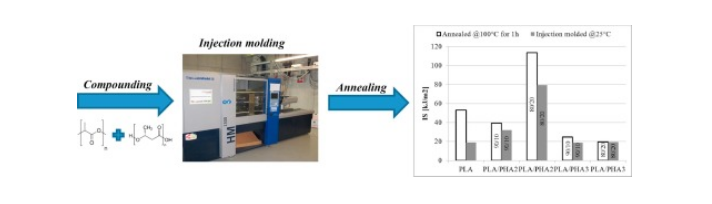
Research indicates that adding oligomeric lactic acid (OLA) as a plasticizer can increase tensile strength by 41%, modulus of elasticity by 10%, and work of fracture by 150% compared to samples without OLA .
HAICHEN PLA injection molding machine models are designed for PLA material characteristics. Our machines feature specialized screws and precise temperature control systems. This helps customers produce high-quality PLA parts consistently.
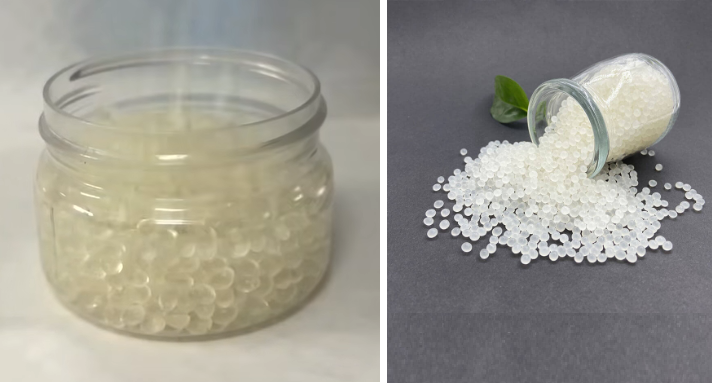
Critical Processing Parameters for PLA Injection Molding
What is a PLA injection molding machine?
A PLA injection molding machine is equipment designed to produce parts from PLA biodegradable material. The machine melts PLA pellets, injects the molten material into a mold, and cools it to form solid products. These machines require specialized screw designs and precise temperature control due to PLA’s narrow processing window and moisture sensitivity.
Drying Requirements
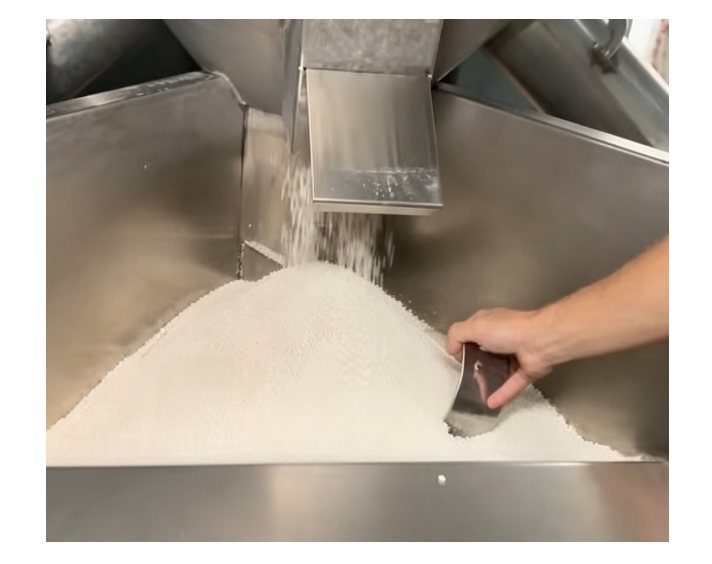
PLA is a highly hygroscopic material. Undried PLA undergoes hydrolysis during melting, causing molecular chain scission. This results in brittle parts, reduced strength, and surface defects like bubbles and silver streaks.
PLA must be dried to a moisture content below 0.02% (200 ppm) before processing. A desiccant dryer with -40°C dew point is recommended. Drying temperature is 80°C with drying time of 2-4 hours.
Dried material should be stored in sealed containers to prevent reabsorption of moisture. Regrind content should be limited to 15% and must be redried. Multiple reprocessing cycles reduce material toughness. PLA is not suitable for load-bearing applications after multiple reprocessing cycles.
Temperature Control
PLA has poor thermal stability. Excessive temperature causes yellowing, carbonization, and degradation. Barrel temperature must be strictly controlled.
Recommended barrel temperature ranges are 165-195°C:
-
Feed zone: 165-175°C
-
Compression zone: 175-185°C
-
Metering zone: 180-190°C
-
Nozzle: 170-180°C
Barrel temperature should not exceed 200°C. During shutdowns, reduce barrel temperature to below 150°C to prevent material degradation from extended residence time.
Mold temperature significantly affects PLA part crystallinity. At mold temperatures below 60°C, PLA cannot crystallize fully. Amorphous molecular chains gradually relax after demolding, causing post-shrinkage. For applications requiring high heat resistance, mold temperature should be maintained at 80-110°C to promote crystallization.
Injection Parameters
PLA melt is sensitive to shear stress. Excessive shear damages the molecular structure and reduces part toughness.
Recommended injection parameters:
-
Screw speed: 40-70 rpm
-
Back pressure: 0.2-0.6 MPa
-
Injection pressure: 60-95 MPa
-
Injection speed: medium to low, with multi-stage filling
Adjust injection pressure and speed based on part wall thickness: increase for thin-wall parts, decrease for thick-wall parts. Holding pressure should be light with short duration. Pressure should decrease gradually to prevent molecular orientation disruption and post-shrinkage deformation.
What are the processing requirements for PLA?
PLA processing requires thorough drying (80°C for 2-4 hours), precise temperature control (165-195°C barrel, 30-50°C mold for amorphous parts, 80-110°C for crystalline parts), and medium-to-low injection speeds. PLA’s narrow processing window demands accurate temperature management to prevent degradation.
HAICHEN PLA injection molding machine provides precise injection control. Our machines support multi-stage injection speed settings. This helps customers optimize molding quality for PLA parts.
Common Processing Issues and Solutions
Part Brittleness
Phenomenon: Parts break easily during use. Strength is insufficient.
Causes: PLA molecular weight decreases during processing. Moisture-induced hydrolysis is the primary cause. Excessive processing temperature also accelerates material degradation.
Solutions:
-
Ensure dried moisture content below 0.02%
-
Control barrel temperature within recommended range
-
Minimize material residence time in the barrel
-
Add toughening agents or blend modifications
Research shows that PLA materials processed with 5% OLA plasticizer show a 41% increase in tensile strength and a 150% increase in work of fracture .
Post-Molding Shrinkage
Phenomenon: Parts shrink 1%-3% within 24 hours after demolding, causing assembly issues.
Causes: Low mold temperature prevents sufficient PLA crystallization. Amorphous molecular chains gradually relax after demolding, causing shrinkage.
Solutions:
-
Increase mold temperature to 80-110°C
-
Extend holding time to 5-8 seconds
-
Use nucleating agents to accelerate crystallization
Studies confirm that PLA with 2% orotic acid (OA) nucleating agent can achieve 52-53% crystallinity and HDT values of 100-131°C under optimized molding conditions .
Surface Defects
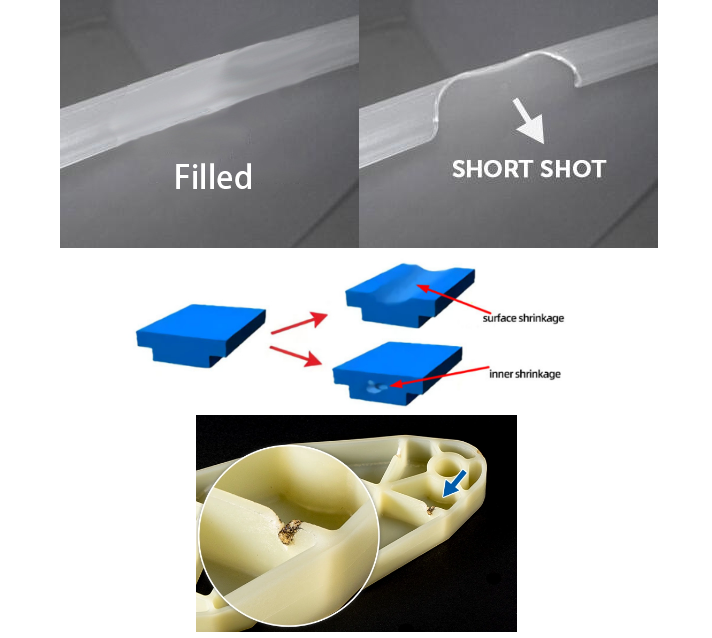
Phenomenon: Silver streaks, bubbles, or flow marks appear on the part surface.
Causes: Material moisture content exceeds specification, or injection speed is too high causing melt fracture.
Solutions:
-
Improve drying control
-
Use multi-stage low-speed filling
-
Add vents at filling end and corners
HAICHEN provides comprehensive process support for PLA processing. Our team helps customers solve drying, temperature control, and injection parameter issues. We offer specialized screw and barrel configurations for what is PLA material processing requirements.
PLA vs. Common Molding Materials
PLA vs. PET Comparison
How does PLA differ from PET in injection molding?
PLA melts at lower temperatures (160-180°C) than PET (250-260°C). PLA has poorer fluidity and requires slower injection speeds. PLA is more sensitive to moisture and heat, requiring careful drying and temperature control. PLA is bio-based and biodegradable, while PET is petroleum-based.
| Property | PLA (Amorphous) | PLA (Crystalline) | PET |
|---|---|---|---|
| Melting point (°C) | 160-170 | 160-170 | 250-260 |
| Processing temp (°C) | 165-195 | 180-210 | 270-290 |
| HDT (°C) | 55-65 | 100-131 | 70-80 |
| Shrinkage (%) | 0.4-0.6 | 0.2-0.4 | 0.2-0.3 |
| Crystallization rate | Very slow | Slow | Moderate |
PLA processing temperature is much lower than PET, resulting in lower energy consumption. However, PLA crystallization rate is very slow. It requires longer cooling times or higher mold temperatures to induce crystallization.
PLA is bio-based and biodegradable. PET is petroleum-based. With tightening environmental regulations, PLA is becoming an ideal alternative to PET.
PLA vs. PP Comparison
| Property | PLA | PP |
|---|---|---|
| Density (g/cm³) | 1.24 | 0.90-0.91 |
| Tensile strength (MPa) | 45 | 25-40 |
| HDT (°C) | 55-65 (amorphous) | 90-110 |
| Biodegradability | Yes | No |
PLA has better rigidity than PP but lower heat resistance. PLA density is higher, requiring more material for the same volume. PLA’s environmental attribute is its primary advantage.
Material Selection Considerations
When choosing PLA material, consider these factors:
-
Service temperature: Crystalline or reinforced PLA for high-temperature applications
-
Mechanical requirements: High-toughness or modified PLA for load-bearing parts
-
Transparency: Select transparent grade PLA
-
Degradation conditions: Confirm the conditions required for biodegradation
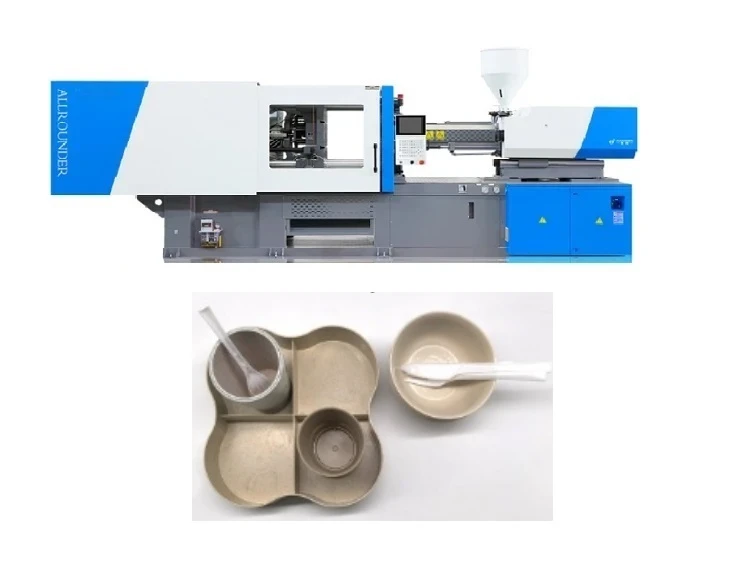
HAICHEN injection machines can process PLA, PET, PP, and many other materials. We provide screw configurations and process parameter recommendations for different materials.
HAICHEN provide injection molding machine configurations optimized for PLA material injection molding machine applications. Our team offers comprehensive technical support for PLA injection molding product manufacturers.
Contact HAICHEN for a customized PLA injection molding solution. Our team will help you select the right equipment for your specific application.


