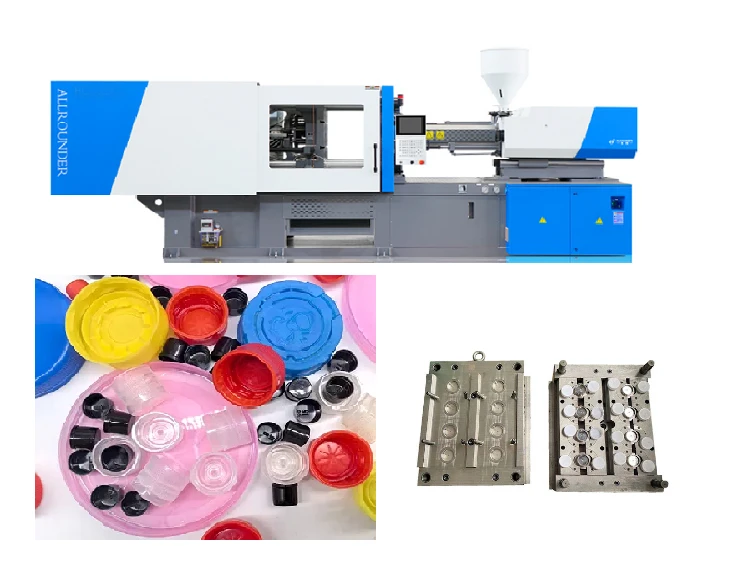
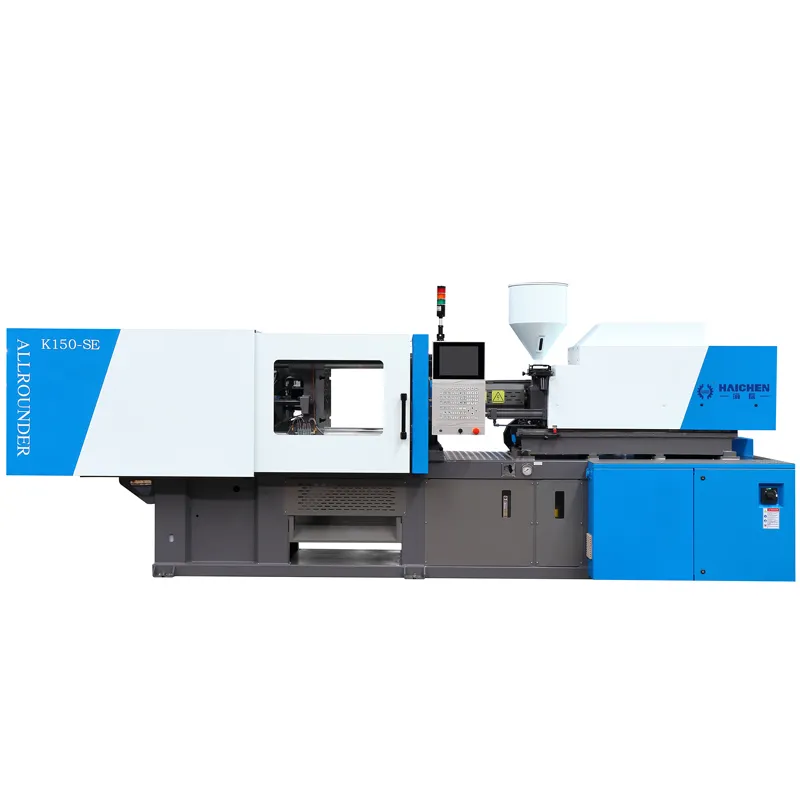
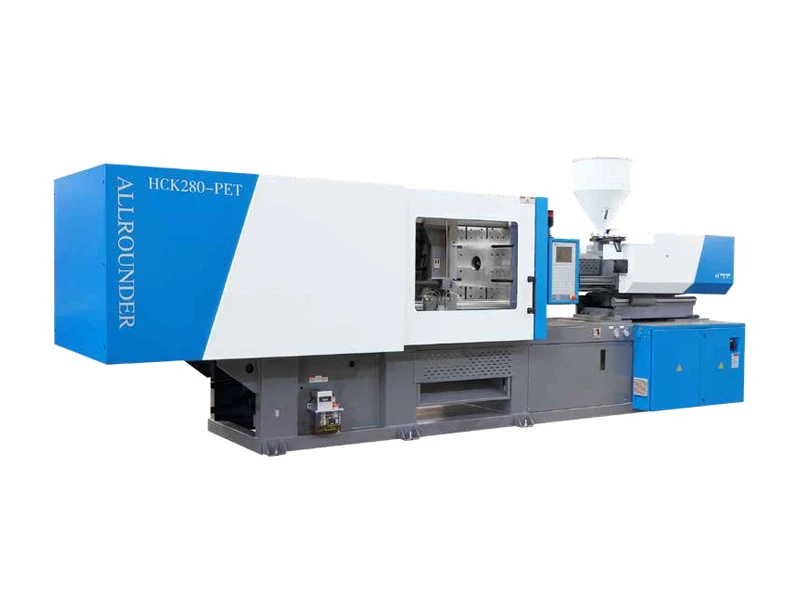
A plastic bottle cap production line uses injection molding machines, multi‑cavity molds, and auxiliary equipment to produce high‑volume caps. The process melts PP or HDPE pellets, injects the material into a cap mold, cools the caps, and ejects them. The whole cycle takes 10‑25 seconds depending on cavity count and cap size. Standard cap types include PCO 28mm, 30mm, and 38mm for beverage and pharmaceutical applications.
The injection molding process for plastic bottle caps follows a fixed sequence. First, the plastic cap making machine plasticizes the raw material in a heated barrel at 200‑260°C. Second, the clamping unit holds the mold shut under 120‑300 tons of force. Third, the injection unit pushes the melted plastic into multi‑cavity molds at high speed. Fourth, cooling channels circulate water to solidify the caps. Fifth, the mold opens and ejector pins push the finished caps out. This sequence repeats automatically for each cycle.
Plastic bottle caps production requires high injection speed and precision because caps have thin walls and complex thread profiles. Multi‑cavity molds (16, 24, 32, or more cavities) are standard for high‑volume output. A 32‑cavity mold can produce over 10,000 caps per hour with a servo‑driven machine. Common materials are PP and HDPE for beverage caps, and specialized resins for pharmaceutical or tamper‑evident closures.
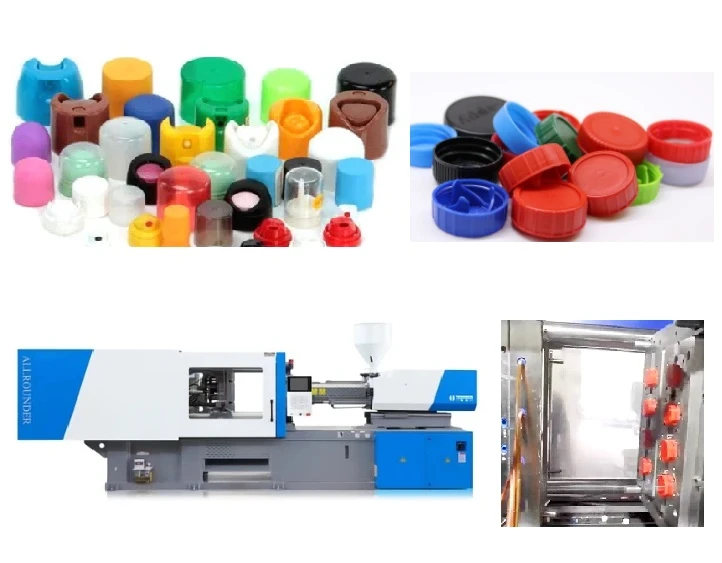
Material selection for plastic bottle caps
-
Polypropylene (PP) for flip top caps and hinge designs
-
High-density polyethylene (HDPE) for carbonated beverage closures
-
Material impact on cap performance
Polypropylene (PP) for flip top caps and hinge designs
PP is a common material for flip top caps, flip caps, and hinge designs. It offers good fatigue resistance for repeated opening and closing, making it suitable for plastic screw caps, bottle caps, and plastic jar caps. PP provides a good balance of stiffness and impact strength. Many flip plastic cap injection molding machine manufacturers choose PP for its excellent organoleptic properties. This ensures the plastic screw caps do not affect the taste of beverages.
High-density polyethylene (HDPE) for carbonated beverage closures
HDPE has higher rigidity than PP. It can withstand higher internal pressures, making it suitable for plastic bottle caps on carbonated drinks. HDPE grades like ELTEX® Superstress™ offer high environmental stress cracking resistance for lightweight cap designs. This helps cap with plastic liners maintain a reliable seal under stress. HDPE is also common for plastic jar caps used with industrial or chemical containers.
Material impact on cap performance
The material choice directly affects plastic screw caps and their sealing performance. PP is lighter and more flexible, ideal for flip top cap designs needing repeated flexing. HDPE is denser and more rigid, offering better chemical resistance and pressure handling. For cosmetic applications, materials like SURLYN™ can achieve a crystal-clear appearance for perfume caps. Flip top plastic cap injection molding machine manufacturers and flip cap producers must choose the right material for their application and target cost. And they will choose
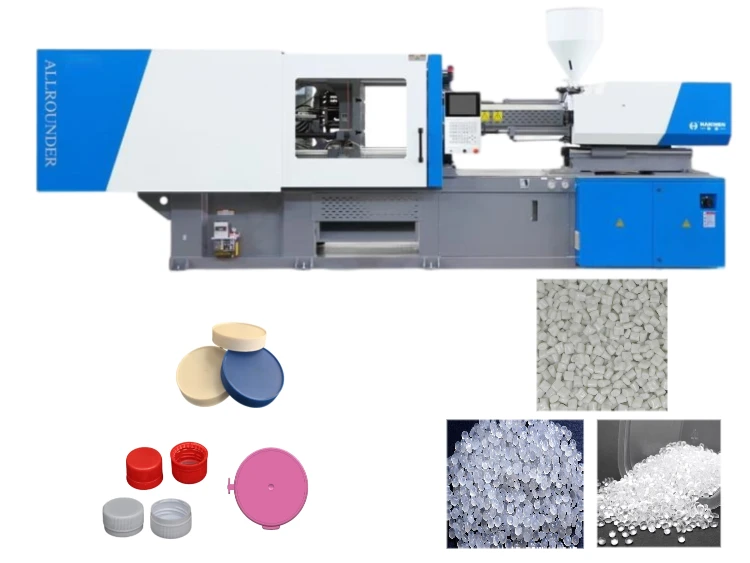
Select Injection molding machine for Plastic bottle caps
-
Clamping force and machine tonnage
-
Injection speed and precision
-
Screw design for PP and HDPE
Clamping force and machine tonnage
The machine clamping force keeps the mold shut during injection. For plastic bottle caps, typical clamping force ranges from 120 to 300 tons. The required tonnage depends on the projected area of the mold and the injection pressure. A 16‑cavity mold for 28mm caps needs around 150‑180 tons, while a 32‑cavity mold may require 230‑300 tons. Undersized machines cause flash defects on the cap threads. Oversized machines waste energy and increase plastic cap injection molding machine costs.
Injection speed and precision
Cap molds have thin walls and intricate thread details. High injection speed ensures complete filling before the material starts to cool. Servo‑hydraulic systems deliver fast, repeatable filling with precise switchover from injection to holding pressure. Accuracy in weight and dimensions is critical for consistent cap torque and sealing performance. Machines with closed‑loop pressure control maintain weight variation within ±0.5% across all cavities.
Screw design for PP and HDPE
Cap molds have thin walls and intricate thread details. High injection speed ensures complete filling before the material starts to cool. Servo‑hydraulic systems deliver fast, repeatable filling with precise switchover from injection to holding pressure. Accuracy in weight and dimensions is critical for consistent cap torque and sealing performance. Plastic injection molding machines with closed‑loop pressure control maintain weight variation within ±0.5% across all cavities.
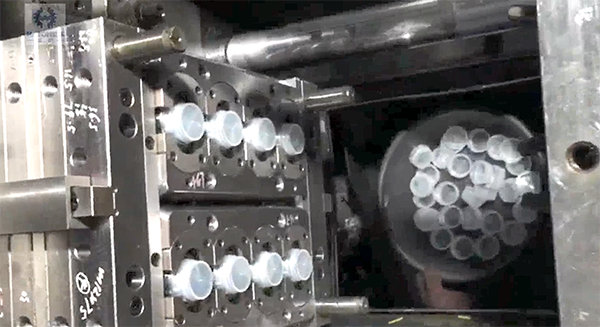
Plastic Bottle Cap Mold design and cavity configuration
-
Multi‑cavity mold layouts
-
Hot runner vs. cold runner systems
-
Cooling channel placement
Multi‑cavity mold layouts
Bottle cap molds use 16, 24, 32, or even 48 cavities to maximize output . A 32‑cavity mold produces 32 caps per cycle. The cavity layout must balance plastic flow to all cavities. Unbalanced flow causes inconsistent cap weight and thread quality. Mold designers use flow simulation software to optimize runner lengths and gate sizes . Cavity counts above 32 require larger platens and higher clamping force.
Hot runner vs. cold runner systems
Hot runner systems keep the plastic melted as it travels from the nozzle to each cavity. This eliminates runner waste and reduces cycle time by 15‑20% . Hot runners are standard for high‑volume cap production. Cold runner systems are simpler and cheaper but produce more scrap. The choice between hot and cold runners depends on production volume, material cost, and automation level .
Cooling channel placement
Cap quality depends on uniform cooling. Uneven cooling causes warping and dimensional variation . Cooling channels must be placed close to the cavity surface for rapid heat removal. For high‑cavity molds, conformal cooling near the thread area is critical. Water temperature is controlled by a chiller at 7‑15°C . Optimal cooling reduces cycle time to 10‑15 seconds for 28mm beverage caps.
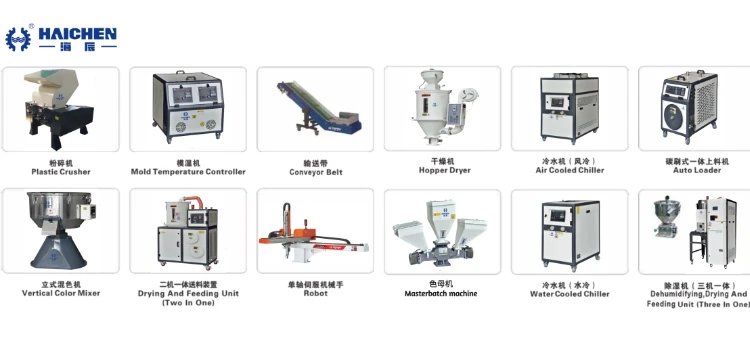
Choose Auxiliary equipment for Plastic Bottle cap production lines
-
Dehumidifying dryers
-
Auto loaders and material handling
-
Chillers and temperature control units
-
Take‑out robots and conveyors
Dehumidifying dryers
PP and HDPE absorb moisture from the air. Wet material causes bubbles and weak spots on cap surfaces. A dehumidifying dryer removes moisture before the pellets enter the machine. PP typically needs drying at 80‑90°C for 2‑3 hours. The dryer ensures consistent melt quality and prevents surface defects.
Auto loaders and material handling
An auto loader transfers dry pellets from the dryer to the machine hopper. Vacuum systems pull the material through sealed pipes, keeping it clean and dry. Loaders run automatically to maintain consistent feed rates. Some systems include color mixing units for masterbatch addition.
Chillers and temperature control units
Mold temperature directly affects cycle time and part quality. A chiller provides cooled water at 7‑15°C for the mold cooling channels. Mold temperature controllers may also be used for applications needing precise surface finish. Stable temperature control reduces scrap rates and improves production consistency.
Robots and conveyors
For automated production, a take‑out robot removes finished caps from the mold. The robot moves between the mold halves after opening, grips the caps, and places them on a conveyor. Some systems include vision inspection for quality control. Automated handling speeds up the cycle and reduces labor costs.
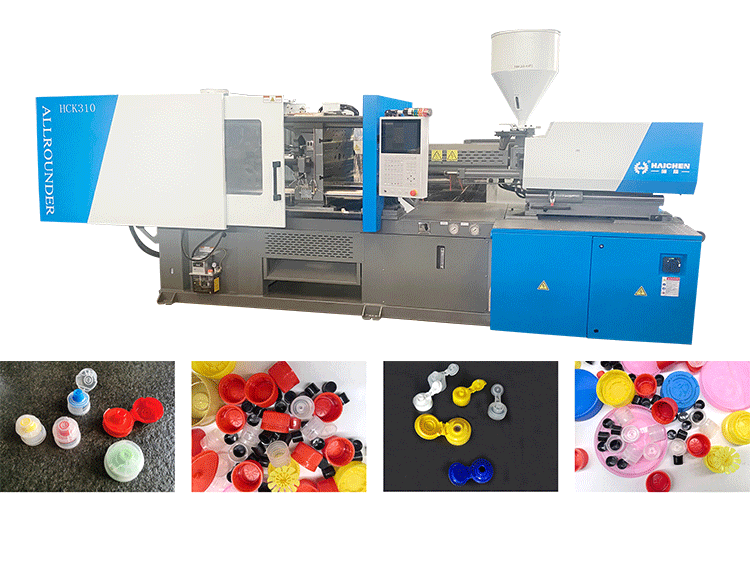
Plastic bottle caps production lines cost
-
Machine price ranges
-
Mold investment
-
Operating costs
-
Total line investment
The cost of plastic bottle cap production line, it mainly includes below four aspects. Like plastic cap injection molding machine costs , mold cost, operationg costs and so on. And it the best way how to evaluate plastic cap injection molding machine manufacturers.
Machine price ranges
Cap injection molding machines range from $10,000 to $38,000 for standard models . A 120‑140 ton servo machine costs approximately $10,000‑$14,800. A 170‑230 ton unit ranges from $22,500‑$38,000. Fully automatic high‑speed systems with 32‑cavity molds can exceed $25,000 . Entry‑level semi‑automatic machines start at $3,000‑$4,800, suitable for low‑volume production .
Mold cost
Multi‑cavity cap molds cost $8,000‑$18,000 depending on cavity count and steel quality. A 16‑cavity mold with P20 steel costs about $8,000‑$12,000. A 32‑cavity mold with hardened H13 steel ranges from $12,000‑$18,000 . Higher cavity counts reduce unit cost per cap but require higher initial investment. Mold lead time is typically 30‑60 days for custom designs .
Operating costs
Energy consumption is a major operating expense. Servo‑driven machines save 30‑60% electricity compared to standard hydraulic machines . For a 170‑ton machine running 24/7, annual energy savings can be $3,000‑$8,000. Raw material costs vary by resin type and quality. Recycled PP can cost 20‑40% less than virgin material but may need more maintenance .
Total line price
A complete production line with machine, mold, and auxiliary equipment ranges from $20,000 to $60,000 depending on output capacity. A 32‑cavity line with servo machine, hot runner mold, dryer, and robot costs approximately $40,000‑$55,000. Return on investment depends on production volume. At 10,000 caps per hour, the line can pay back in 12‑18 months under typical market conditions.