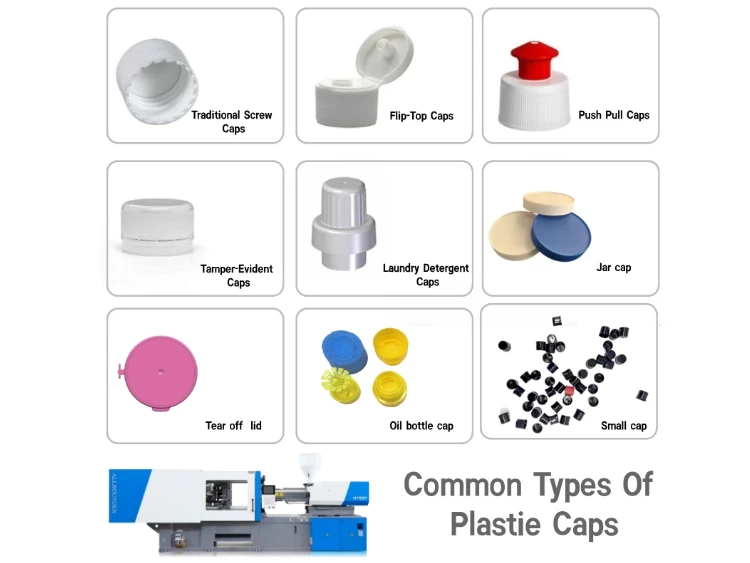
tPlastic bottle cap materials directly affect product performance and injection molding machine selection.
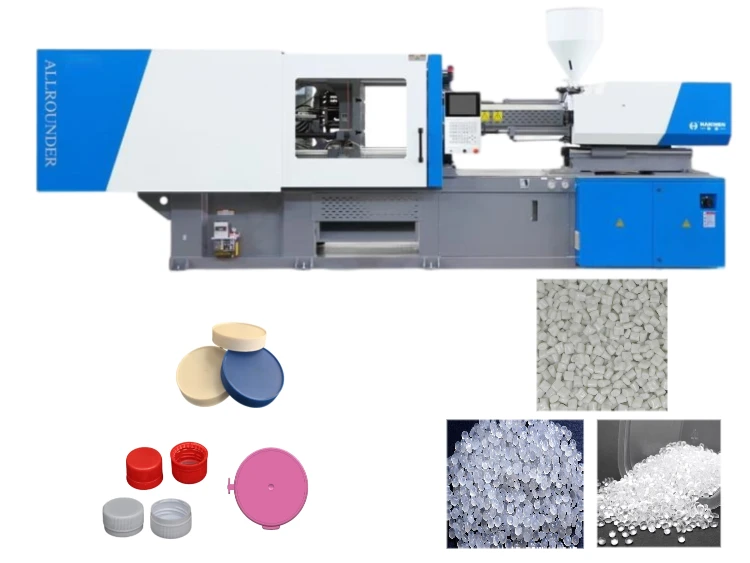
For plastic cap manufacturers, understanding material properties is not only about sealing strength and impact resistance—it is also the foundation for selecting the right injection molding machine, including screw configuration and temperature control.
Choose the right material for your plastic caps, and pair it with the right equipment.
Core Plastic Bottle Cap Materials PP HDPE and rPET
Thermoplastic polymers are the primary materials used for plastic bottle caps. Among them, polypropylene (PP) and high-density polyethylene (HDPE) dominate the market. Recently, recycled PET (rPET) has also emerged as a sustainable alternative. Whether for plastic water bottle caps or plastic jar caps, material selection is critical.
Each material offers distinct advantages. PP provides excellent fatigue resistance for flip caps. HDPE delivers high stiffness for carbonated beverage closures and bottles plastic caps. rPET supports mono-material packaging trends. Understanding their melt behavior and shrinkage rates is the first step in choosing the right screw design and temperature control for your plastic cap injection molding machine.
PP (Polypropylene)
PP is the most widely used material for plastic bottle caps due to its excellent fatigue resistance and flexibility. It is ideal for flip caps and closures that require repeated opening and closing. PP also offers good chemical resistance and is suitable for food contact applications.
Key processing parameters: Melt temperature 200-230°C, mold temperature 20-60°C, shrinkage 1.5-2.5%.
HDPE (High-Density Polyethylene)
HDPE provides high stiffness and excellent barrier properties, making it ideal for carbonated beverage closures and bottles plastic caps that require pressure resistance. It also offers good impact strength and is suitable for cold-fill applications.
Key processing parameters: Melt temperature 180-220°C, mold temperature 20-50°C, shrinkage 1.0-2.0%.
rPET (Recycled PET)
rPET is gaining traction as a sustainable alternative for plastic bottle caps, supporting mono-material packaging trends. However, rPET has a narrow processing temperature range and requires precise thermal control to prevent degradation. PCR materials also exhibit batch-to-batch variability, demanding smarter adaptive control from the injection molding machine.
Key processing parameters: Melt temperature 260-280°C, mold temperature 10-30°C, pre-drying required (160°C, 4-6 hours).
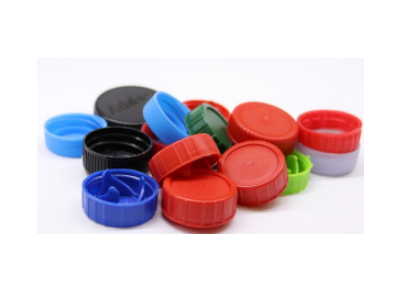
How Additives Enhance Plastic Bottle Cap Materials
Beyond base polymers, additives such as lubricants, antioxidants, and nucleating agents are essential for optimizing the processability and longevity of each plastic bottle cap. Whether for standard plastic caps or plastic screw caps, additives are indispensable.
Lubricants
Improve mold release efficiency and reduce friction between the material and mold surface, enabling faster cycle times.
Antioxidants
Prevent thermal degradation during processing, ensuring consistent material properties across production runs.
Nucleating Agents
Increase stiffness and clarity, improving the dimensional stability and appearance of finished caps.
These additives alter material flow and abrasiveness, so the injection molding machine must feature corrosion-resistant and wear-resistant screw and barrel designs to maintain long-term production stability for bottle plastic caps.
For reliable processing, HAICHEN has optimized its screw L/D ratio and plasticizing system for thin-wall plastic cap applications, effectively handling wear and flow changes caused by additives. This ensures consistent production quality across PP, HDPE, and rPET materials.
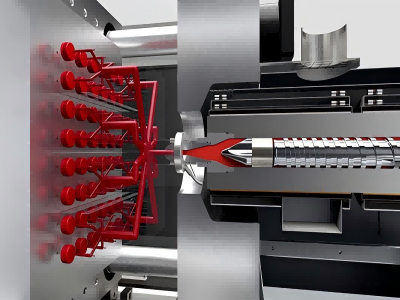
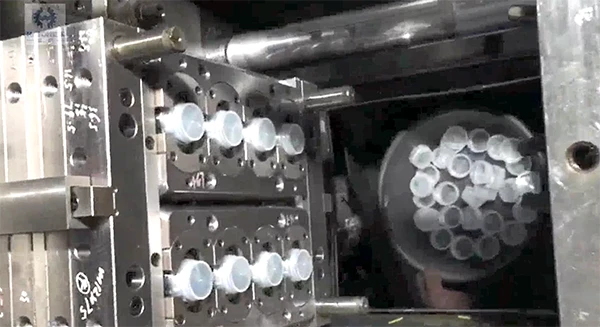
Matching Plastic Bottle Cap Materials to Injection Molding Machines
From raw materials to finished plastic bottle caps, the plastic cap injection molding machine is the core conversion equipment. Different plastic bottle cap materials impose varying demands on clamping force, injection speed, screw geometry, and temperature control precision.
Processing PP and HDPE for Caps
PP and HDPE offer a wide processing window but are sensitive to cooling rates. A dedicated screw ensures uniform plasticization for plastic water bottle caps and beverage closures. Pair it with a servo-driven system to balance precision and energy efficiency. HAICHEN’s K series servo energy-saving plastic cap injection molding machines cover clamping forces from 120 to 1,000 tons, offering customized screw configurations and temperature control solutions for PP, HDPE, and other plastic caps materials.
Challenges with PET and Recycled Materials
PET has a narrow processing temperature range, requiring a high L/D ratio screw and precise thermal control to prevent degradation. Recycled (PCR) materials exhibit batch-to-batch variability, demanding smarter adaptive control from the plastic cap injection molding machine to ensure stable plastic bottle cap production. HAICHEN’s servo motor system adjusts oil pump flow and speed based on actual demand, effectively reducing energy consumption while maintaining processing stability.
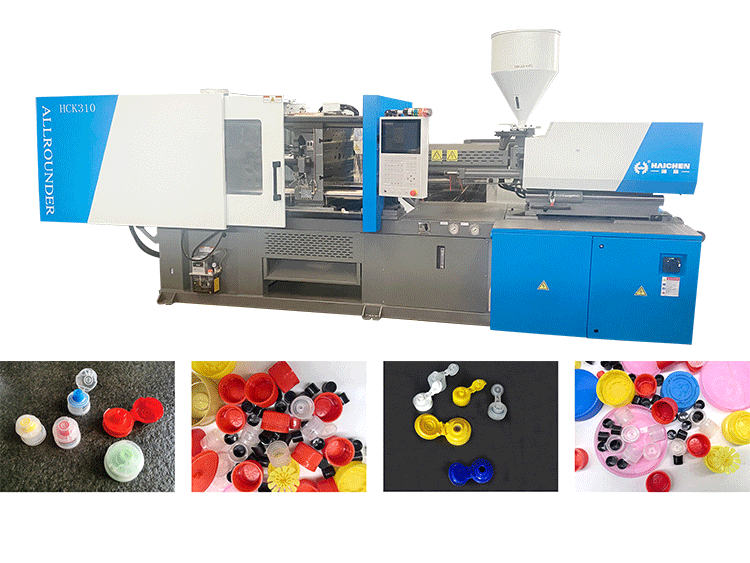
Four Key Criteria for Plastic Bottle Cap Material Processing
Selecting the right plastic cap injection molding machine for your plastic bottle caps requires a comprehensive evaluation across four dimensions. These factors directly impact plastic caps quality, production cost, and delivery efficiency.
| Criterion | Key Requirement | Impact on Plastic Bottle Cap Materials |
|---|---|---|
| Clamping Force | 120-300 tons | Prevents flashing for different viscosity materials |
| Injection Speed | High-speed (thin-wall filling) | Ensures complete filling for PP/HDPE plastic caps |
| Screw Design | Specialized wear-resistant screw | Handles abrasion from additives and recyclates |
| Automation | Robot and vision inspection compatibility | Ensures consistency in high-volume bottles plastic caps production |
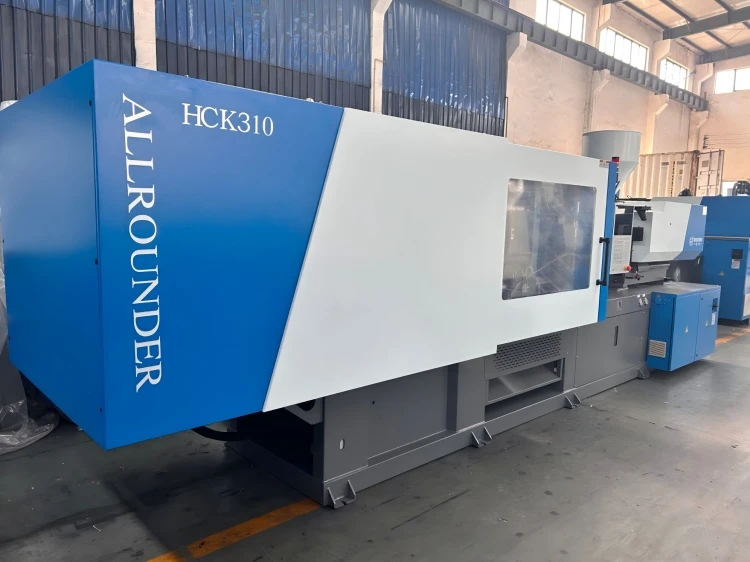
HAICHEN’s E series standard injection molding machines range from 120 to 1,000 tons, flexibly matching different cap with plastic mold clamping requirements. The all-electric model delivers 400 mm/s injection speed, specifically designed for high-speed packaging applications like thin-wall plastic bottle caps.
New Trends in Plastic Bottle Cap Materials PCR and Mono-Material
Environmental regulations and brand commitments are driving the shift toward post-consumer recycled (PCR) content and mono-material packaging for plastic bottle caps, presenting new challenges for the plastic cap injection molding machine.
PCR materials exhibit unstable flow behavior, demanding higher plasticizing torque and smarter closed-loop control from the injection molding machine. Mono-material solutions (e.g., PP bottle with PP cap) test the equipment’s flexibility in material switching and process adaptability. Choosing a plastic cap injection molding machine that can flexibly handle these changes is key for plastic cap manufacturers to stay competitive.
HAICHEN has developed dedicated screw solutions for recycled (PCR) material processing to handle batch variations, while its servo control system provides stable closed-loop parameter adjustments, helping plastic caps manufacturers navigate the sustainability transition.
Frequently Asked Questions
Q: What are the main plastic bottle cap materials used in injection molding
A: The primary plastic bottle cap materials are PP (polypropylene) and HDPE (high-density polyethylene). rPET (recycled PET) is also increasingly used for sustainable packaging applications.
Q: What additives are used in plastic bottle cap production
A: Common additives include lubricants (improve mold release), antioxidants (prevent thermal degradation), and nucleating agents (increase stiffness and clarity). These additives enhance plastic bottle cap materials for specific performance requirements.
Q: How do I choose the right plastic bottle cap material for my application
A: PP is best for flip caps requiring fatigue resistance. HDPE is ideal for carbonated beverage closures needing high stiffness. rPET suits sustainable mono-material packaging. Consider sealing requirements, chemical exposure, and processing parameters when selecting plastic bottle cap materials.
Q: What are the key processing parameters for PP and HDPE caps
A: PP: melt temperature 200-230°C, mold temperature 20-60°C, shrinkage 1.5-2.5%. HDPE: melt temperature 180-220°C, mold temperature 20-50°C, shrinkage 1.0-2.0%.
Q: What injection molding machine is needed for plastic bottle cap production
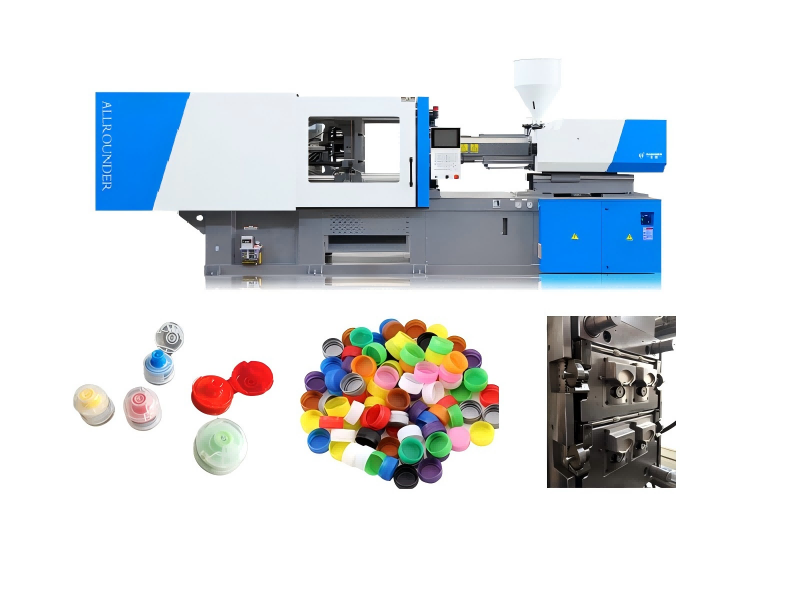
A: A plastic cap injection molding machine should have 120-300 tons clamping force, high-speed injection capability, wear-resistant screw design, and automation compatibility. HAICHEN E series machines range from 120 to 1,000 tons with all-electric models offering 400 mm/s injection speed.
Q: How does recycled material affect plastic bottle cap production
A: PCR materials exhibit batch-to-batch variability and unstable flow behavior, requiring higher plasticizing torque and smarter closed-loop control from the injection molding machine.