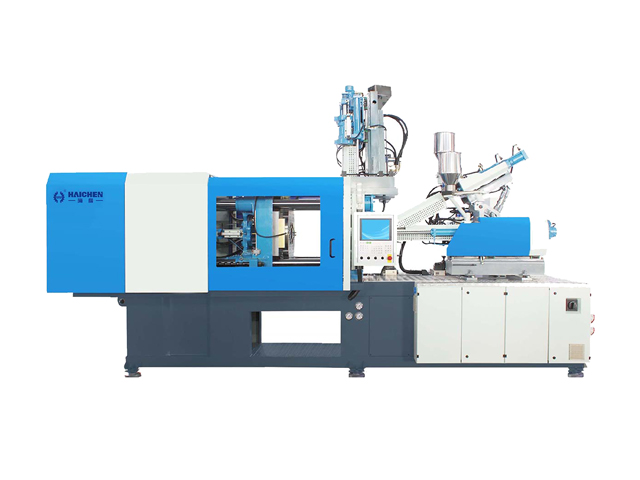
Plastic medical container injection molding is a common way to make rigid plastic containers for healthcare, pharmaceutical, laboratory, and diagnostic uses. In this process, a plastic resin is heated, melted, and injected into a mold. The mold gives the material its final shape, and the part then cools before the machine removes it.
The process looks simple, but each step affects the final container. Material choice affects strength and chemical resistance. Mold design affects shape and wall thickness. Meanwhile, the injection molding machine controls temperature, pressure, speed, and cycle time.
A typical process follows this path:
Plastic Material → Preparation → Mold → Melting → Injection → Cooling → Ejection → Inspection → Packaging
The exact method changes with the container design. For example, a rigid specimen cup may use injection molding, while a hollow pharmaceutical bottle may use blow molding or injection blow molding.
What Are Plastic Medical Containers?
Plastic medical containers are packaging and healthcare products that store, collect, protect, or transfer medicines, samples, and other materials.
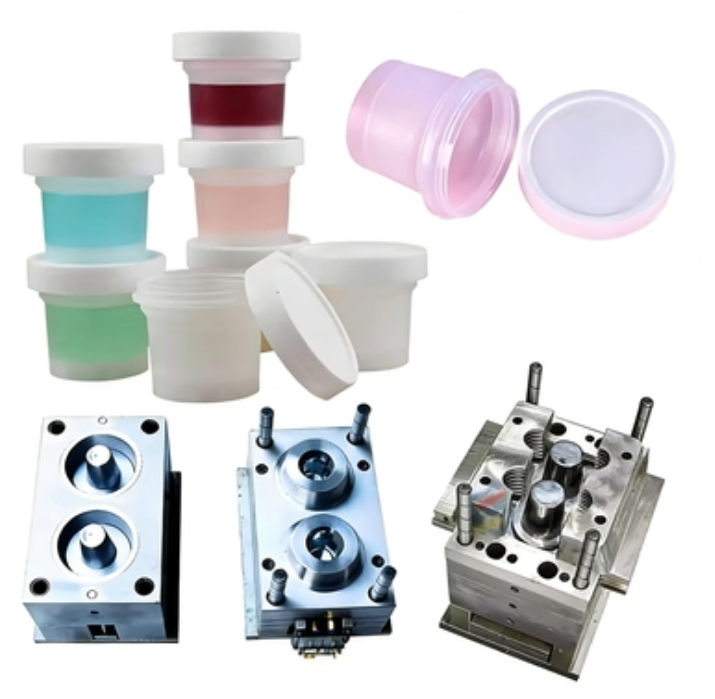
Manufacturers produce them in many shapes and sizes. Some are small enough to fit in one hand, while others need a larger body, a threaded neck, or a special closure.
Common Types of Plastic Medical Containers
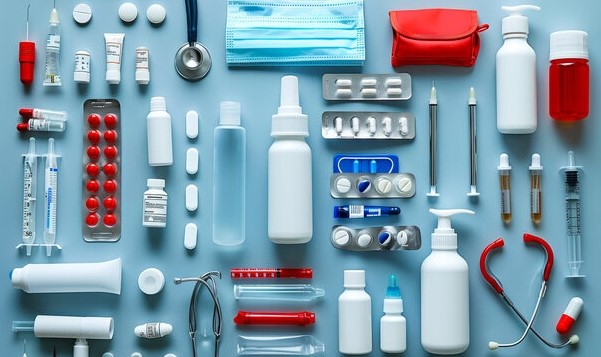
Common products include:
- Medicine bottles
- Pharmaceutical containers
- Specimen containers
- Laboratory sample containers
- Medical cups
- Diagnostic containers
- Plastic vials
- Healthcare packaging containers
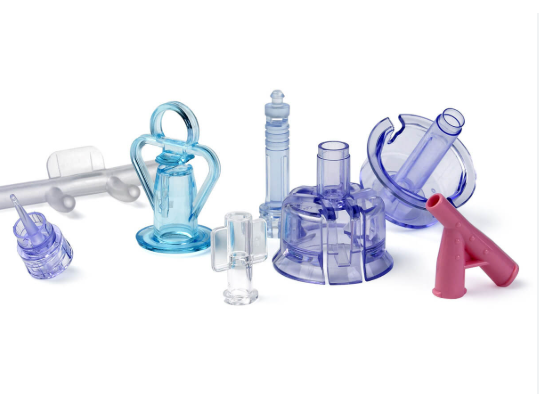
Some products use a simple body and lid. Others include threads, snap-fit features, seals, ribs, or other details.
Because of this, the mold and injection molding machine must match the product design.
What Are Plastic Medical Containers Used For?
These containers can support many healthcare tasks.
They may be used for:
- Storing medicines
- Collecting samples
- Laboratory testing
- Pharmaceutical packaging
- Diagnostic work
- General healthcare applications
For example, a specimen container needs a different design from a medicine bottle. Likewise, a laboratory sample cup may not need the same neck design as a pharmaceutical bottle.
Therefore, the product use should be defined before the manufacturer selects the material and molding method.
What Materials Are Used in Plastic Medical Container Injection Molding?
Material choice affects the container’s strength, weight, chemical resistance, surface, and processing needs.
For plastic medical container injection molding, PP and HDPE are two common materials to consider. Other polymers can also fit specific applications.
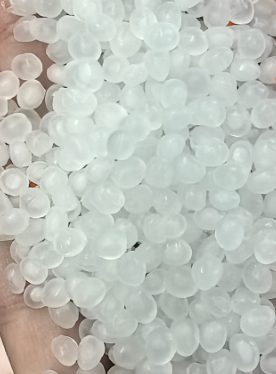
Polypropylene (PP) Medical Containers
PP offers a useful balance of low weight, rigidity, and chemical resistance.
It can be used for selected:
- Medical containers
- Caps
- Cups
- Closures
- Healthcare packaging parts
PP can also handle higher temperatures than some common packaging plastics. However, performance depends on the resin grade and the container design.
When manufacturers use PP medical containers, the machine settings should match the resin. Screw speed, barrel temperature, injection speed, and mold temperature can all affect the result.
HDPE Medical Containers
HDPE is known for good toughness, impact resistance, and chemical resistance.
It can suit:
- Bottles
- Sample containers
- Pharmaceutical packaging
- Healthcare containers
- Caps and related parts
HDPE can be processed with different forming methods. For example, some hollow bottles use blow molding, while selected parts can use injection molding.
The container shape, wall thickness, and production target determine the final process.
Other Medical Plastics
Other materials may also be used in medical packaging.
These can include:
- PET
- PVC
- PC
- Other specialized polymers
PET can fit some transparent packaging products. PVC can be used in certain healthcare applications. PC can fit products that need higher impact strength or specific optical properties.
However, no single resin fits every medical container. The material should match the product, application, and required performance.
How Does Plastic Medical Container Injection Molding Work?
The medical container manufacturing process uses several controlled steps. The machine, mold, resin, and cooling system work together throughout the cycle.
Step 1: Select the Plastic Material
The first step is to define the material.
Manufacturers normally check:
- Strength
- Chemical resistance
- Flexibility
- Weight
- Surface needs
- Temperature needs
- Product use
- Applicable specifications
For example, PP may work well for a rigid container or cap, while HDPE may fit a tougher bottle design.
The resin supplier’s technical data should guide the processing temperature and other conditions.
Step 2: Prepare the Material
The plastic pellets must reach the molding machine in a suitable condition.
Some resins need drying because they absorb moisture. Others do not need the same type of drying, but clean storage still matters.
Factories should control:
- Material identity
- Resin storage
- Batch information
- Contamination
- Additives
- Regrind use
When a moisture-sensitive resin is used, a dryer can help prepare the material before plasticizing.
However, the drying method should come from the resin supplier rather than from a general rule.
Step 3: Design the Container and Mold
The product design comes before mold production.
Engineers define:
- Container size
- Wall thickness
- Opening
- Neck design
- Threads
- Cap fit
- Ribs
- Snap features
Next, they design the mold around those details.
For injection molding, the mold controls the final shape. The gate, runner, vent, cooling channels, and cavity all affect the molding result.
A multi-cavity injection molding system can make several parts in one cycle. As a result, it can raise production output.
Still, more cavities also increase mold cost and machine requirements. Therefore, cavity number should match the target production volume.
Step 4: Melt the Plastic in an Injection Molding Machine
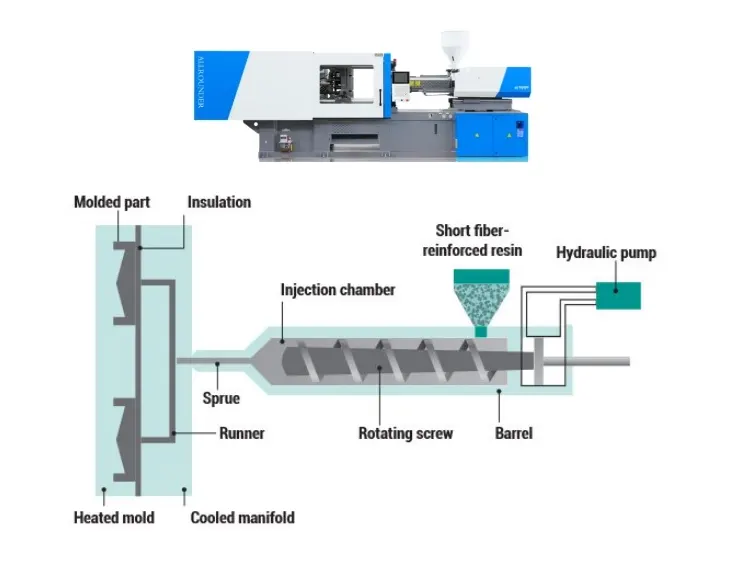
The plastic pellets enter the hopper and move toward the screw.
Inside the barrel, the screw rotates while heaters warm the material.
The screw then:
- Moves the pellets forward
- Melts the resin
- Mixes the melt
- Measures the shot
Temperature control matters because unstable melt conditions can cause changes in filling and part weight.
The screw diameter also affects the shot range and plasticizing capacity.
Therefore, the injection molding machine should match the selected resin and production cycle.
Step 5: Inject the Melt Into the Mold
The screw moves forward and pushes the molten plastic through the nozzle and runner system.
The melt then enters the cavity.
For a thin-wall medical container, the mold may need controlled filling speed. If the melt cools too much before the cavity fills, the part can show a short shot or weld line.
For this reason, the machine may use several injection stages.
For example, the process can start with a faster fill and then reduce speed near the end of filling.
The machine controls:
- Injection speed
- Injection pressure
- Injection position
- Holding pressure
- Holding time
However, machine settings are only part of the result. Gate design, runner balance, venting, mold temperature, and resin flow also matter.
Step 6: Cool the Container
After injection and holding pressure, the plastic remains in the mold while it cools.
The cooling system removes heat from the container.
Cooling affects:
- Cycle time
- Shape stability
- Surface quality
- Wall condition
- Part release
If cooling is too short, the container may deform during ejection.
On the other hand, excessive cooling slows production.
Therefore, the mold needs a cooling system that provides enough heat removal without adding unnecessary cycle time.
Step 7: Eject and Remove the Container
Once the part reaches a suitable temperature, the mold opens.
The ejector system removes the product.
For automated medical container injection molding, a robot can take the part from the mold and place it on a conveyor.
This reduces manual handling. In addition, automatic removal can keep the machine cycle more consistent.
Step 8: Inspect and Package the Product
The final step checks the molded container.
Depending on the product, the factory may inspect:
- Product dimensions
- Part weight
- Wall thickness
- Surface appearance
- Flash
- Leakage
- Closure fit
- Cleanliness
After inspection, the product moves to packaging.
The packing process depends on the container and customer requirements. Some products need simple packing, while others need controlled handling after molding.
How Does Injection Molding Make Medical Containers?
A simple way to understand plastic medical container injection molding is to follow the material through the machine.
Plastic Pellets Enter the Machine
The resin enters the hopper.
Then the screw moves the material into the heated barrel.
The Plastic Melts
Heat and screw movement turn the pellets into a plastic melt.
The screw also measures the amount needed for the next shot.
Stable plasticizing helps the machine produce similar shots from cycle to cycle.
The Melt Fills the Mold
The screw moves forward and sends the melt into the mold.
The material flows through the runner and gate and fills the cavity.
For a multi-cavity mold, the melt must reach each cavity in a balanced way.
The Container Takes Shape
The cavity creates the container geometry.
The mold can form:
- Threads
- Ribs
- Snap fits
- Text
- Closures
- Other fine features
As a result, injection molding can create more than a simple round container.
The Part Cools and Leaves the Mold
Cooling removes heat from the plastic.
Then the mold opens and the ejector or robot removes the part.
The basic production flow is:
Plastic Pellets → Heating → Plasticizing → Injection → Mold Filling → Cooling → Ejection → Inspection
Injection Molding vs Blow Molding for Medical Containers
Not every medical container uses injection molding.
The forming method depends on the product shape.
| Feature | Injection Molding | Blow Molding |
|---|---|---|
| Typical products | Rigid parts, cups, closures, selected containers | Hollow bottles and containers |
| Dimensional control | High, depending on process | High, depending on process |
| Complex details | Good | More limited in some areas |
| Hollow products | Possible with suitable processes | Strong fit |
| High-volume production | Yes | Yes |
| Main forming method | Inject melt into a mold | Expand hot plastic with air |
Injection molding works well for rigid parts with detailed features. It also suits high-cavity production.
Blow molding has a strong fit for hollow bottles because the hot plastic expands inside the mold.
Injection blow molding can combine injection-formed neck features with a hollow body.
Therefore, manufacturers should consider:
- Container shape
- Wall thickness
- Neck design
- Container volume
- Plastic material
- Production output
- Mold cost
- Cycle time
How Are Medical Containers Checked for Quality?
Medical container quality control can include several checks.
Dimensions
Inspectors check important dimensions such as height, diameter, opening size, and neck size.
These measurements matter when the container must work with another part.
Wall Thickness
Wall thickness can affect strength and shape.
Therefore, manufacturers may measure several points on the container.
Appearance
Visual inspection can find:
- Flash
- Black specks
- Burn marks
- Scratches
- Color changes
- Short shots
For high-volume production, camera systems can automate some of these checks.
Leakage
Some containers need leakage testing.
The test method depends on the product and its intended use.
Closure Fit
A cap or lid needs to fit the container correctly.
The factory may check screw threads, seals, snap fits, or other closure features.
Cleanliness
Clean handling becomes more important when the product has a controlled cleanliness requirement.
The factory can control material handling, machine cleaning, product transfer, operator contact, and packaging according to the product specification.
Material and Batch Traceability
Factories may record resin lots and production batches.
This provides a clearer record when a quality problem occurs.
Why Are Plastic Medical Containers Widely Used?
Plastic offers several useful features for medical and pharmaceutical packaging.
Lightweight
Plastic containers can be lighter than some other packaging materials.
This can reduce package weight during storage and transport.
Durable
Many plastic grades can handle normal drops and daily handling.
Still, strength depends on the material, wall thickness, and container design.
Chemical Resistance
PP and HDPE can offer good chemical resistance.
However, the manufacturer should check compatibility with the actual medicine, liquid, or chemical.
Design Flexibility
Plastic can take many shapes.
For example, one container can include a threaded neck, ribs, a snap feature, or a special grip.
This flexibility helps manufacturers create packaging for different uses.
High-Volume Manufacturing
Injection molding can produce large quantities of identical parts.
With a multi-cavity injection molding machine, one cycle can create many containers at the same time.
Also, a medical container production line can connect molding, inspection, and packing to reduce manual work.
Production Cost
When the mold, machine, cycle time, and material use are well matched, plastic molding can provide efficient high-volume production.
However, plastic and glass have different performance characteristics. The right material depends on the product and application.
Can Plastic Medical Containers Be Recycled?
Some plastic medical containers can enter recycling systems.
However, material type alone does not decide whether a used container can be recycled.
PP Medical Container Recycling
PP is recyclable in many markets.
Still, the actual recycling route depends on local collection systems and the condition of the product.
HDPE Medical Container Recycling
HDPE is also widely used in recycling streams.
Clean and clearly identified HDPE containers are easier to sort and process.
Contamination and Medical Waste
A used pharmaceutical or medical container may contain product residue.
Therefore, a container made from recyclable PP or HDPE does not automatically belong in normal household recycling.
Users and manufacturers should follow local waste and recycling rules.
What Makes Medical Containers Different From Ordinary Plastic Containers?
The difference often comes from the production requirements rather than the basic molding process.
| Factor | Ordinary Plastic Container | Medical Container |
|---|---|---|
| Material requirements | Application-dependent | Application-dependent |
| Dimensional consistency | Important | Often highly important |
| Cleanliness | Product-dependent | May be more demanding |
| Traceability | Varies | Often important |
| Quality control | Varies | Often more controlled |
| Packaging | Standard or application-based | Application-specific |
Not every medical container needs the same production environment.
For example, a simple healthcare cup may have different controls from a pharmaceutical container used for a sensitive product.
Therefore, the material, mold, machine, inspection system, and packing process should match the actual application.
How Does a Medical Container Production Line Work?
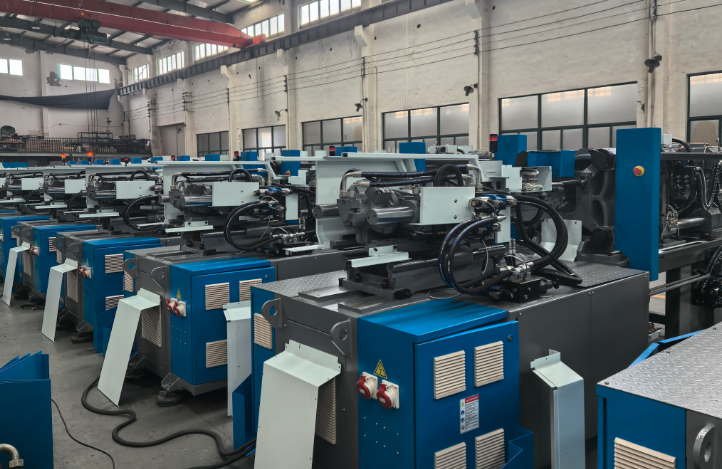
A high-volume medical container production line can connect several steps.
A typical flow is:
Material Handling → Injection Molding → Automatic Part Removal → Inspection → Packing
Depending on the product, the line can also include:
- Material dryer
- Auto loader
- Chiller
- Mold temperature controller
- Robot
- Conveyor
- Vision inspection
- Packing equipment
Automation can reduce manual handling and help keep the production flow steady.
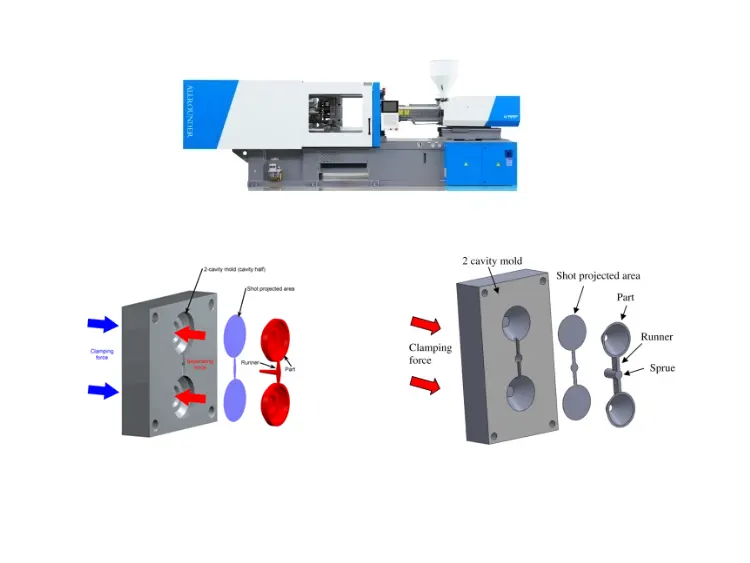
For injection molding projects, the machine should match the mold cavity number, product weight, projected area, and target cycle time.
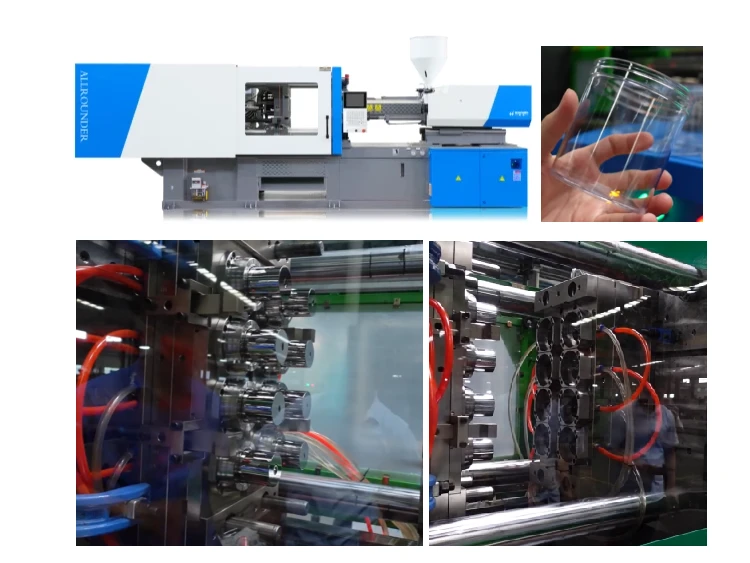
Haichen currently offers several injection molding machine platforms, including servo-energy-saving and oil-electric hybrid machines. Its published oil-electric hybrid series includes models from HCK110-SE to HCK310-SE, with listed functions such as multi-stage injection control, PID temperature control, low-pressure mold protection, electronic position control, and a manipulator interface. (haichen-imm.com)
These machine functions can support projects that need controlled injection, stable machine movement, or automatic part removal.
What Injection Molding Machine Is Used for Plastic Medical Containers?
The answer depends on the container and mold.
A machine supplier normally checks:
- Product weight
- Plastic material
- Mold cavity number
- Projected area
- Mold dimensions
- Injection volume
- Target cycle time
- Production output
The required clamping force comes from the mold and projected area rather than from the word “medical.”
For example, a small container with 16 or 32 cavities may need more machine capacity than a larger single-cavity product.
Therefore, manufacturers should provide the mold data before choosing the machine.
FAQ
How are plastic medical containers made?
Plastic medical containers can be made through injection molding, blow molding, injection blow molding, or other suitable forming methods. The process depends on the container shape, material, wall structure, and production needs.
What plastic is used for medical containers?
PP and HDPE are common choices for many plastic containers. PET, PVC, PC, and other polymers can also fit selected applications.
Are PP medical containers common?
Yes. PP can be used for selected medical containers, cups, caps, closures, and other healthcare packaging parts. The final resin grade should match the product requirements.
Are HDPE medical containers made by injection molding?
Some HDPE parts can use injection molding. Hollow HDPE bottles are also commonly made with blow molding processes. The container design determines the best method.
What is the difference between injection molding and blow molding?
Injection molding pushes melted plastic into a mold. Blow molding expands hot plastic with air to create a hollow product. Injection molding often fits rigid parts and detailed shapes, while blow molding fits many hollow containers.
Can plastic medical containers be recycled?
Some PP and HDPE containers can be recycled. However, the recycling route depends on material identification, contamination, product residue, collection systems, and local rules.
How are medical containers checked?
Manufacturers can check dimensions, wall thickness, appearance, leakage, closure fit, cleanliness, and batch information. The exact inspection plan depends on the product.
Can medical containers be made in different sizes?
Yes. Manufacturers can change the product design and mold to make different container sizes. The machine and production setup may also change when product weight or cavity number changes.
Author: Yang, Senior Engineer, Haichen Machinery
Related Machine Guide for Manufacturers
The plastic medical container injection molding process starts with material and mold selection, but the injection molding machine also controls important parts of the cycle.
For manufacturers planning a new project, the machine should match the product weight, material, mold cavity number, clamping force, injection capacity, cooling system, and target output.
For the machine selection side, see:
[Medical Container Injection Molding Machine: How to Choose the Right Machine]
This related guide covers machine tonnage, injection unit selection, multi-cavity molds, injection speed, cleanroom production, automation, cycle time, and project cost.