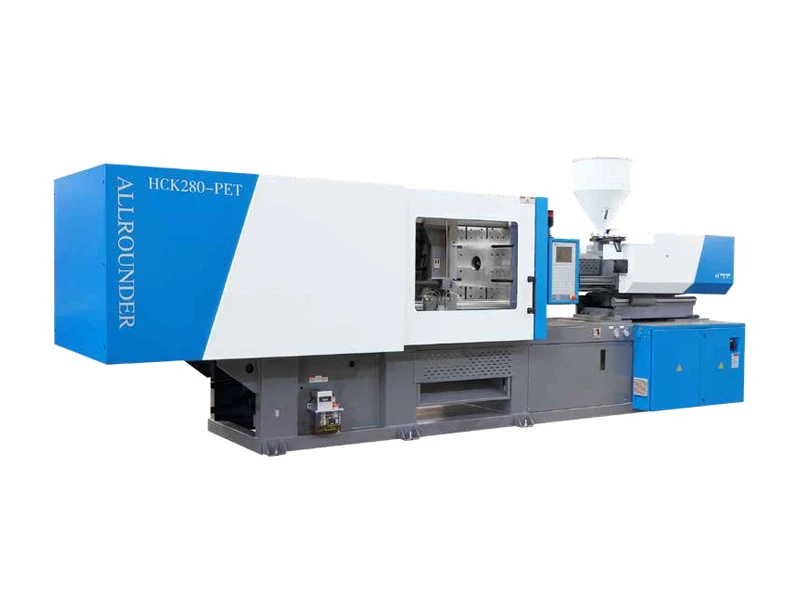
PLA has become a popular material for injection molding because it comes from renewable resources and works well for many consumer and packaging applications.
However, PLA needs careful process control. If manufacturers expose it to too much heat, moisture, or mechanical stress, the material can degrade during production.
From an injection molding machine manufacturer’s point of view, PLA degradation rarely comes from one setting alone.
Instead, the material, injection unit, heating system, screw, and mold all affect the result.
So, how can manufacturers keep PLA stable during continuous injection molding production?
Let’s look at the main causes and practical solutions.
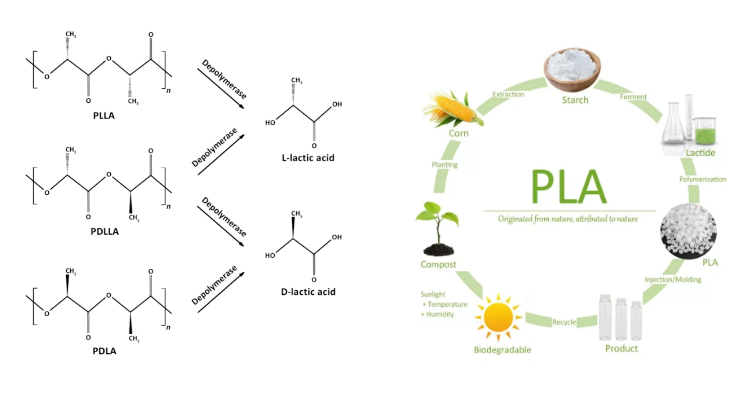
What Causes PLA Degradation During Injection Molding?
Excessive Barrel Temperature
PLA has a specific processing temperature range. When the melt temperature stays above the recommended range for too long, the polymer can start to break down.
As a result, the material may lose strength and show discoloration, dark spots, or an unusual smell.
Therefore, manufacturers should treat temperature as a control point rather than simply increasing it to improve material flow.
A stable heating system also matters. If the barrel temperature fluctuates significantly, the melt condition can change from cycle to cycle.
Long Residence Time
PLA can degrade when it remains inside a hot barrel for too long.
This problem often occurs when the injection unit is much larger than the actual shot requirement.
For example, a small part may need only a small amount of material, while an oversized barrel holds a much larger volume of PLA.
Consequently, some material may stay inside the barrel for several cycles and receive unnecessary heat exposure.
Production interruptions can create the same problem. If the machine stops while the barrel remains at processing temperature, PLA can continue to receive heat even though the machine is not producing parts.
High Moisture Content
Moisture can cause serious problems during PLA injection molding.
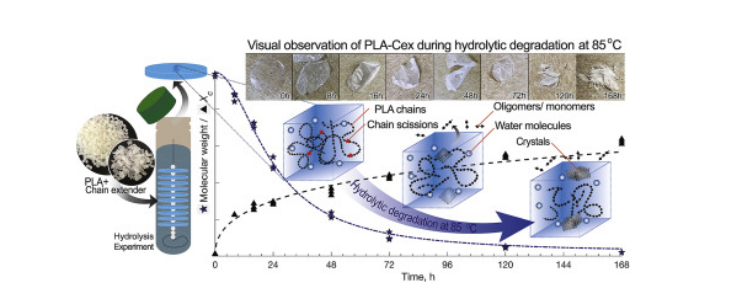
PLA can absorb moisture from the surrounding air. When wet material enters the hot barrel, moisture can trigger hydrolysis during processing.
This reaction can reduce the polymer’s molecular weight and affect the strength of the molded part.
You may then see brittle parts, bubbles, surface defects, or inconsistent mechanical properties.
For this reason, material handling plays an important role in PLA processing.
Excessive Shear
The screw needs to rotate and plasticize PLA, so some shear is normal. However, excessive shear can generate additional heat inside the melt.
High screw speed, excessive back pressure, and an unsuitable screw design can increase this effect.
Therefore, operators should not use high screw speed or back pressure simply to shorten plasticizing time.
Instead, they should aim for stable melting with the lowest practical shear.
How to Prevent PLA Degradation
Dry PLA Before Processing
Proper drying provides the first line of protection against moisture-related PLA degradation.
Use a suitable dryer and follow the drying temperature and time recommended by the PLA supplier.
Different PLA grades can require different drying conditions, so avoid using one drying recipe for every material.
After drying, keep the material away from humid air before it enters the injection molding machine.
Also, check the material again after a long production stop. If dried PLA has absorbed moisture during storage or handling, dry it again before production.
Set the Right Processing Temperature
Start with the processing temperature recommended by the PLA supplier.
Then, adjust the barrel zones according to the material grade, part design, and actual melt condition.
Do not copy the temperature settings used for PP or ABS.
The goal is to reach a stable melt condition without unnecessary heat exposure.
If the part fills correctly at a lower setting, there is no reason to keep increasing the temperature.
In practice, a stable and suitable temperature usually works better than an unnecessarily high one.
Reduce Residence Time
The easiest way to reduce residence time is to match the injection unit with the actual production requirement.
For example, if the mold requires a small shot, avoid using a much larger screw unless the application requires it.
Also, plan the machine shutdown process carefully. Do not leave PLA sitting in a hot barrel during a long production break.
When production stops for an extended period, follow the PLA supplier’s recommended shutdown or purging procedure.
Control Screw Speed and Back Pressure
Use moderate screw speed and back pressure during plasticizing.
Screw speed affects plasticizing time. A higher speed can make plasticizing faster, but it can also increase shear heat.
Back pressure can improve melt consistency, but excessive back pressure can create additional heat as well.
Therefore, start with moderate settings and increase them only when production requires it.
The target is simple: stable plasticizing without unnecessary heat or shear.
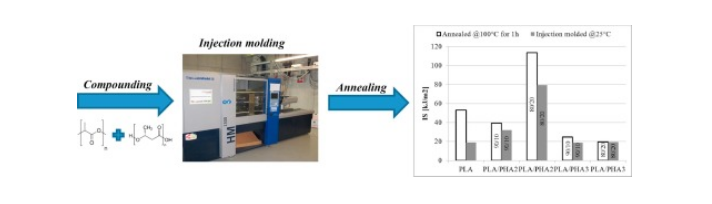
How to Optimize the Injection Molding Machine for PLA
Choose the Right Screw and Barrel
The screw and barrel have a direct influence on how PLA melts and moves through the machine.
For many standard PLA applications, a suitable general-purpose screw can provide good results.
However, demanding applications may require a screw design that gives stable melting with controlled shear.
When selecting an injection molding machine, check:
- Screw diameter
- L/D ratio
- Compression ratio
- Plasticizing capacity
- Screw material
- Barrel material
- Wear resistance
Most importantly, match the screw size with the required shot weight.
An oversized screw may increase residence time, while an undersized screw may struggle to provide enough plasticizing capacity.
As a machine manufacturer, we recommend selecting the screw and barrel according to the PLA grade, shot weight, cycle time, and production volume.
Control Injection Speed and Pressure
Injection speed mainly affects how quickly the molten PLA fills the mold.
If the speed is too low, the melt may cool before it reaches the end of the cavity. This can cause short shots, weld lines, or poor surface quality.
However, extremely high injection speed can increase shear, especially when the mold uses narrow gates or thin flow channels.
Therefore, set the injection speed according to the part thickness, gate design, flow length, and required cycle time.
Injection pressure should provide enough force for complete filling and packing. At the same time, avoid using excessive pressure when a lower setting can produce the same result.
Keep the Mold Temperature Stable
Mold temperature affects filling, cooling, shrinkage, and dimensional stability.
If mold temperature changes significantly between cycles, part quality can also change.
A stable mold temperature helps maintain consistent:
- Part dimensions
- Surface appearance
- Cooling time
- Shrinkage
- Ejection performance
For this reason, check the mold cooling system together with the injection molding machine.
For large or flat PLA parts, balanced cooling becomes especially important because uneven cooling can increase deformation.
How to Identify PLA Degradation
Discoloration and Black Specks
Color changes can provide an early warning of material problems.
Yellowing, brown areas, dark spots, or black specks may indicate that PLA has experienced excessive thermal stress.
An unusual burnt smell can also provide a useful warning.
When these signs appear, first check the barrel temperature and production history. Then, check whether the machine experienced a long stop or whether the screw settings created excessive shear.
This approach helps identify the source instead of simply changing injection pressure.
Brittle or Weak Parts
If molded PLA parts suddenly become brittle or lose strength, check the material condition and processing history.
Moisture can contribute to this problem, while excessive heat can also reduce material performance.
Therefore, first check whether the material received proper drying. Then, review the melt temperature and residence time.
If the machine has operated normally but part strength remains unstable, check the PLA grade and material supplier’s processing recommendations as well.
Bubbles and Surface Defects
Bubbles, silver streaks, rough surfaces, and other unusual marks can indicate moisture or unstable molding conditions.
Start by checking the material drying and storage conditions.
Next, inspect the feeding system. Dried PLA can pick up moisture again if the material remains exposed to humid air before entering the barrel.
If the material condition looks normal, check mold filling and temperature control.
A step-by-step inspection usually works better than changing several machine parameters at once.
Final Tips for Stable PLA Injection Molding
Stable PLA production comes from controlling the complete molding process rather than relying on one machine setting.
Here are the main points to remember:
- Dry PLA correctly before processing.
- Keep barrel temperature within the recommended range.
- Match the injection unit with the actual shot size.
- Avoid unnecessary residence time inside the hot barrel.
- Use moderate screw speed and back pressure.
- Choose a screw and barrel suitable for the PLA application.
- Set injection speed and pressure according to the mold and part design.
- Keep mold temperature stable.
- Check discoloration, brittleness, bubbles, and surface defects early.
In practice, PLA injection molding does not have to be complicated. Once the material, machine, mold, and process parameters match each other, manufacturers can achieve stable production with fewer material problems.
From an injection molding machine manufacturer’s perspective, we recommend evaluating the PLA grade, part weight, mold cavities, shot weight, cycle time, and required output before selecting the machine.
That way, you can choose the right injection unit and screw configuration from the beginning instead of trying to solve PLA degradation problems after production starts.