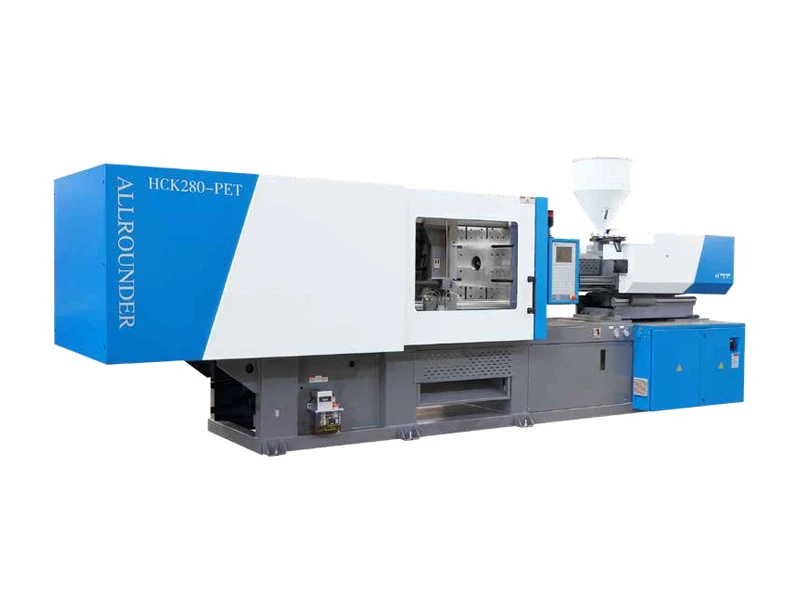
The process of loading injection molding machines includes preliminary preparations, rust prevention, booking confirmation and container loading schedule, precise lifting, and professional securing.
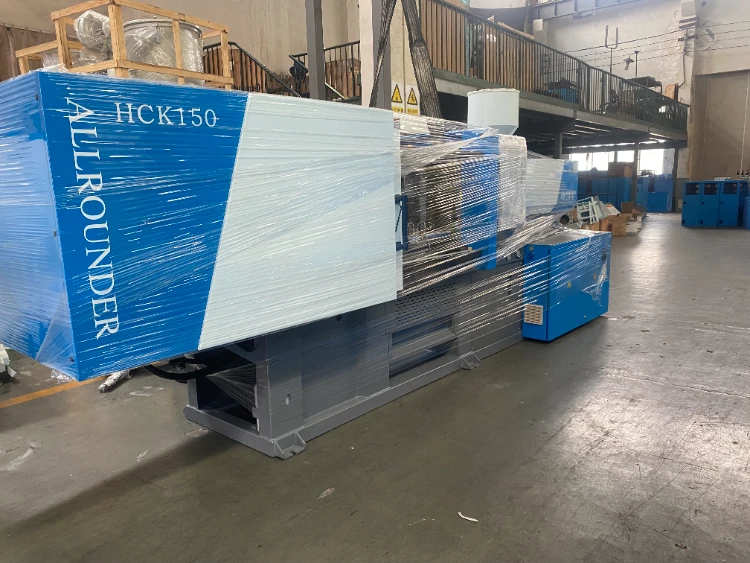
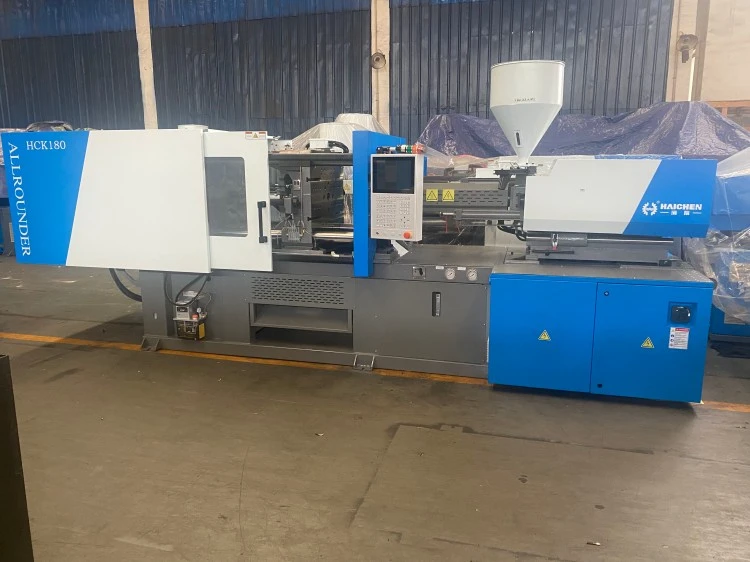
Last week, our Haichen loaded a 1*40HQ container, mainly for HCK150 and HCK180 injection molding machines. We want to share our on-site container loading experience.
The key to loading injection molding machines into containers is ensuring they are securely installed, especially during hoisting and fixing. It is to first “stablely position” it through precise hoisting, and then “lock it in” inside the container through strong fixation at multiple points and in multiple directions, making it part of the container so that it can safely sail thousands of miles by sea.
The process of loading an injection molding machine into a container involves four main steps as follows
- Step1: Preliminary preparations
- Step2: Rust prevention
- Step3: Booking confirmation and container loading schedule
- Step4: Precise lifting
- Step5: Professional securing
Preliminary preparations
Before lifting, our factory adjusted the locking position with the minimum mold thickness.
This is to lock the moving parts and prevent abnormal mechanical collisions or damage from swaying during suspended transport.
We will also fix the control panel, hopper, safety gate, etc.
Material removal and drainage
Evacuating the hydraulic oil serves a dual purpose: we reduce the overall weight and, more importantly, we actively comply with international maritime environmental regulations. By doing this ourselves, we prevent any risk of oil leaks that could lead to pollution and costly penalties. This is a crucial step in preventing internal corrosion during sea transport.
Evacuation of hydraulic oil
Evacuating the hydraulic oil is not only for weight reduction, but also to comply with international maritime environmental regulations.
Completely drain the hydraulic oil from the tank and piping system.
A thin film is wrapped around the sheet metal of the injection molding machine to prevent scratches.
Rust prevention
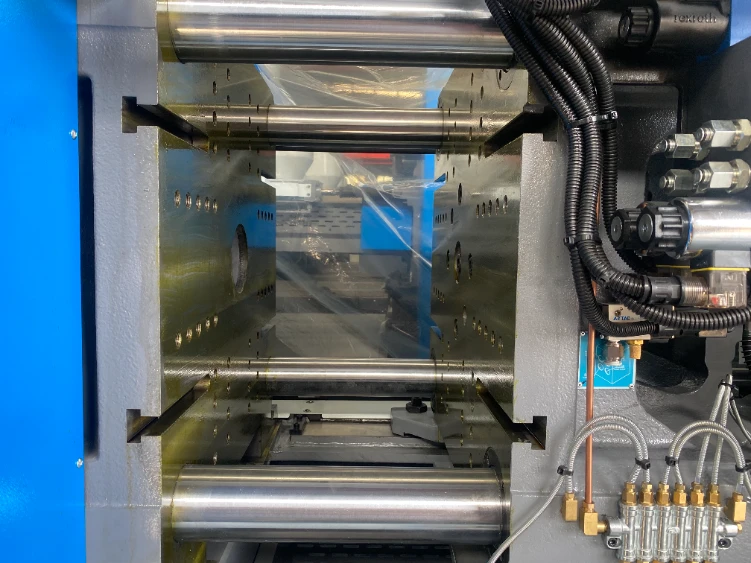
For precision mechanical parts exposed to air, such as tie rods, mold platen surfaces, slide rails, and piston rods, rust-preventive oil or rust inhibitor should be applied evenly after cleaning.
Rust prevention for tie rods (columns)
These are the main beams of the clamping system, bearing enormous clamping forces and requiring extremely high surface precision. Rust prevention relies on a hard film rust-preventive oil applied before leaving the factory. Once dry, this oil film acts like a transparent hard shell, forming a physical barrier, and its rust-preventive period typically exceeds one year.
Rust prevention for Mold plate surface (moving mold/fixed plate)
This large iron plate needs to be attached to the mold, and its flatness directly affects the mold’s closing accuracy. In addition to applying anti-rust oil to the template surface, sometimes vapor phase corrosion inhibitor treatment is applied to the T-slot area where the mold is installed. This involves placing a small amount of vapor phase corrosion inhibitor (VCI) in the slot.
Apply rust-preventive oil to the mold platen.
Rust prevention for sliding guides (or linear guides):
These are components that slide around during mold opening and closing, requiring rust prevention without affecting smooth operation. A common practice is to automatically apply lubricating oil using a brush or oil manifold block. Before shutting down the equipment, a layer of lubricating oil film is formed on the guide surface, which provides rust prevention during routine maintenance.
Booking confirmation and container loading schedule
After finishing production, we need to book a container with the forwarder. Take our plastic injection molding machine-HCK150&HCK180 for example, we need 1*40HQ for loading.
We sent the booking file to the forwarder; the forwarder will check with the Destination Port Agent in detail about Container type, Destination Port, and so on.
The forwarder will inform us of the confirmed ETD. We will arrange loading according to the ETD.
Precise lifting
Maintain a proper balance of the machine’s center of gravity during lifting. Use a suitable forklift according to the tonnage of the injection molding machine.
Start with the lighter tasks and gradually increase the heavier ones
Starting with lighter items and then moving to heavier ones is like using lighter equipment to “clear the way,” while placing the heavier items near the door—it’s both labor-saving and safe.
In practice, we load the HCK150 (4.4 tons) first, pushing it all the way to the front of the container. Then we hoist the HCK180 (6.0 tons) and place it closer to the door.
Lighter equipment offers less rolling resistance, making it easier for our forklift operator to push it to the far end.
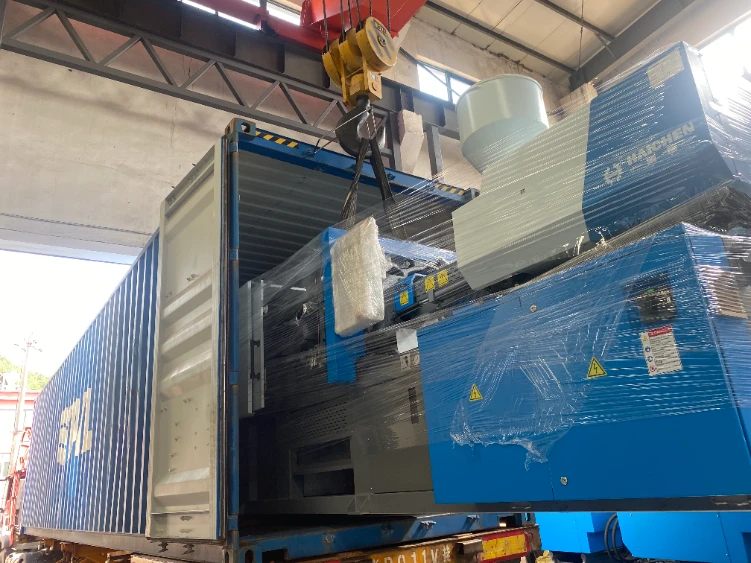
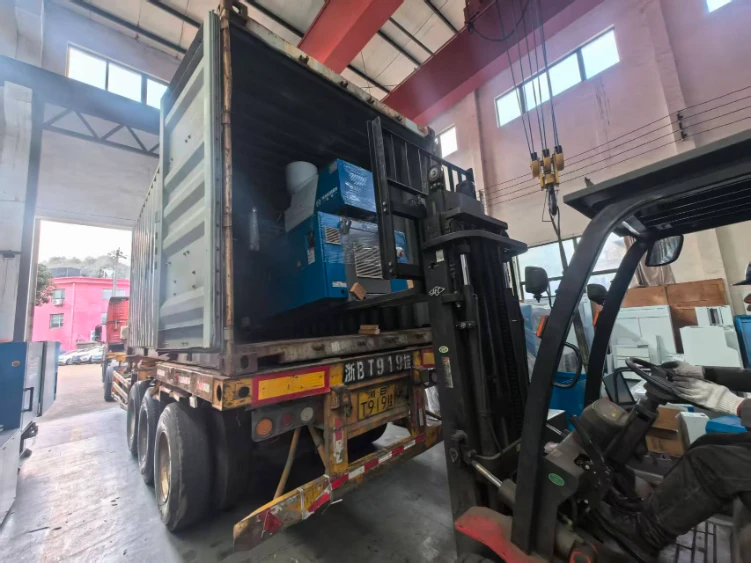
The machine should be placed in the middle of the container, with roughly equal distance between it and the left and right sides, to help maintain the overall balance of the container.
Professional securing
The key to packing small injection molding machines as a whole unit in a cabinet lies in the “details”.
“Rooted” at the Bottom: Wooden Wedges Prevent Slippage
The equipment base and container floor are both metal, resulting in low friction. When the ship rocks, the equipment is prone to sliding forward or backward.
Our solution: We hammer hardwood wedges into the gaps between the base and the floor, securing them tightly in all directions. For each HCK150 and HCK180 unit, after the wedges are driven in, someone must kick them firmly a couple of times; only if they don’t move are they considered.
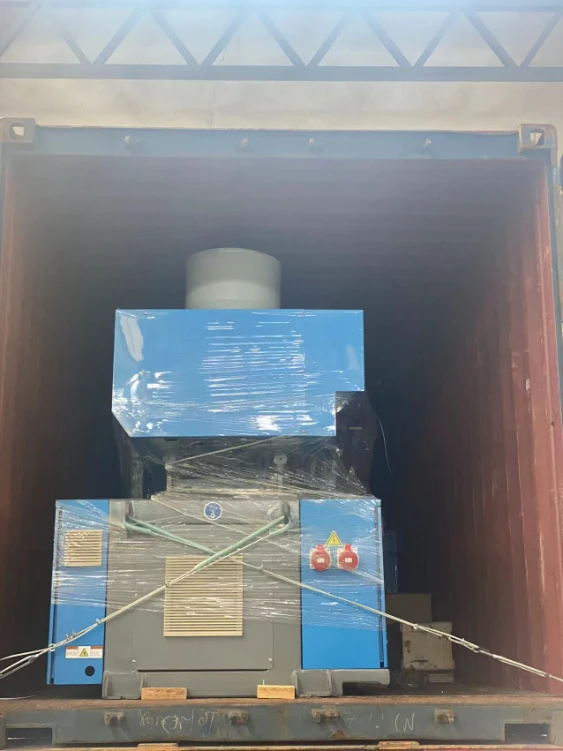
Steel wire rope is the main anchor point
We’re absolutely meticulous about it. While bottom anti-slip is just the foundation, the steel wire rope is what truly withstands the rough seas. We use 16mm steel wire rope, starting from the factory-designed anchoring rings on both sides of the equipment, and diagonally extending to the corner fittings at the four corners of the container’s inner wall.
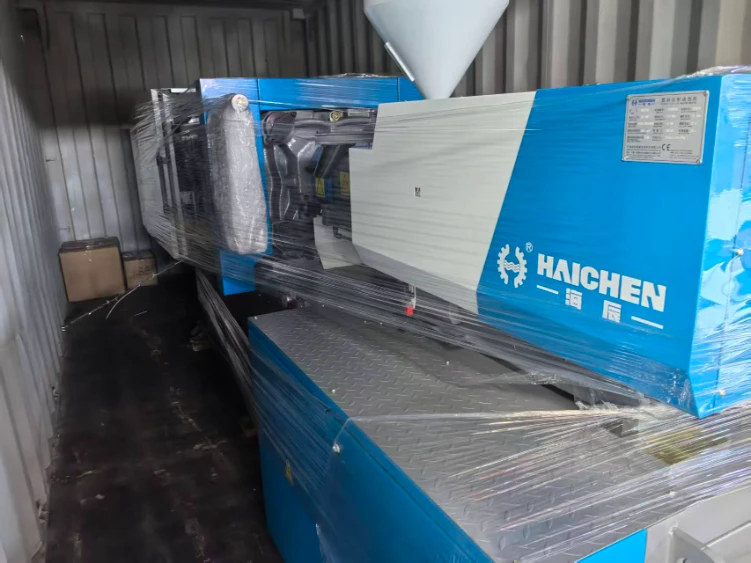
Strapping Assist
Flexible Replacement: While steel wire rope is sturdy, it is also stiff and can easily scratch the paint where it contacts the equipment surface. We will use synthetic fiber strapping (polyester strapping) as a supplement in areas where steel wire rope is difficult to maneuver.
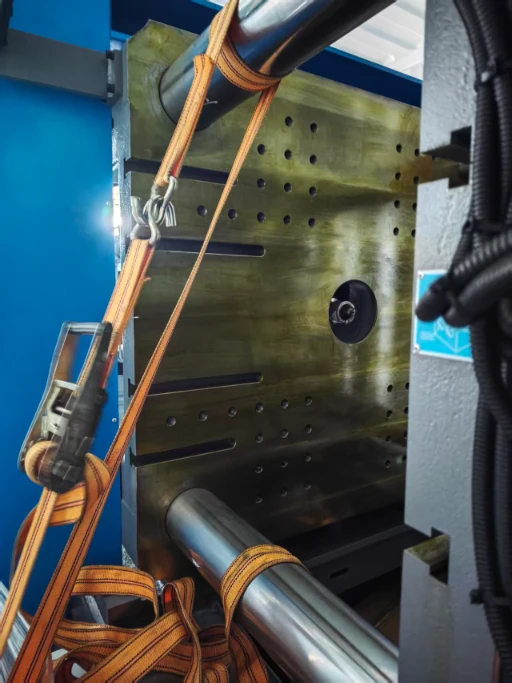
In practice, we often use high-quality synthetic fiber straps (like polyester straps) for auxiliary or even primary fixation. We prefer these straps because they are easy to handle and won’t damage the equipment’s paint—especially when we combine them with wire ropes for extra security.
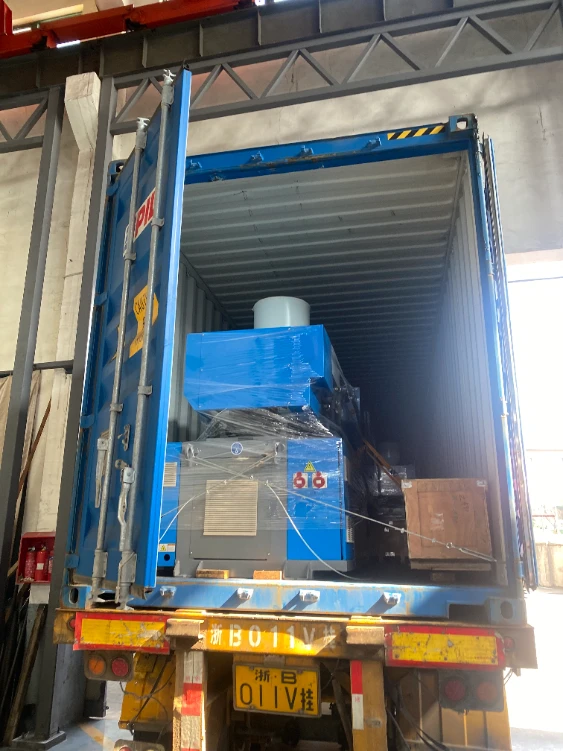
Our company offers photos/videos to clients, focusing on fixed details, packaging labels, and the condition of the container doors after the seals are affixed.
This is not only for the customer’s records but also to demonstrate to customs at the destination port.
Clients will know the appropriate forklift size, where to start, and the order of untying and securing the goods. Some meticulous clients even show our videos to their unloading workers, essentially providing a safety briefing beforehand.