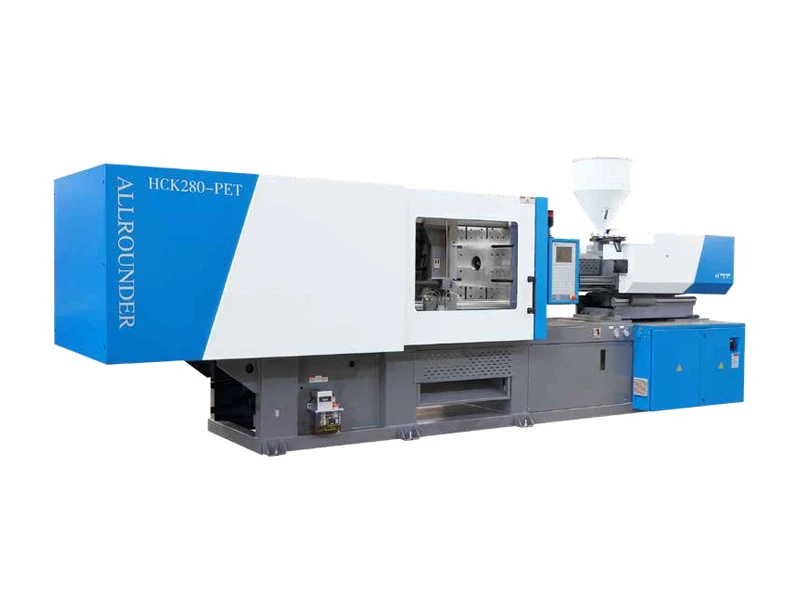
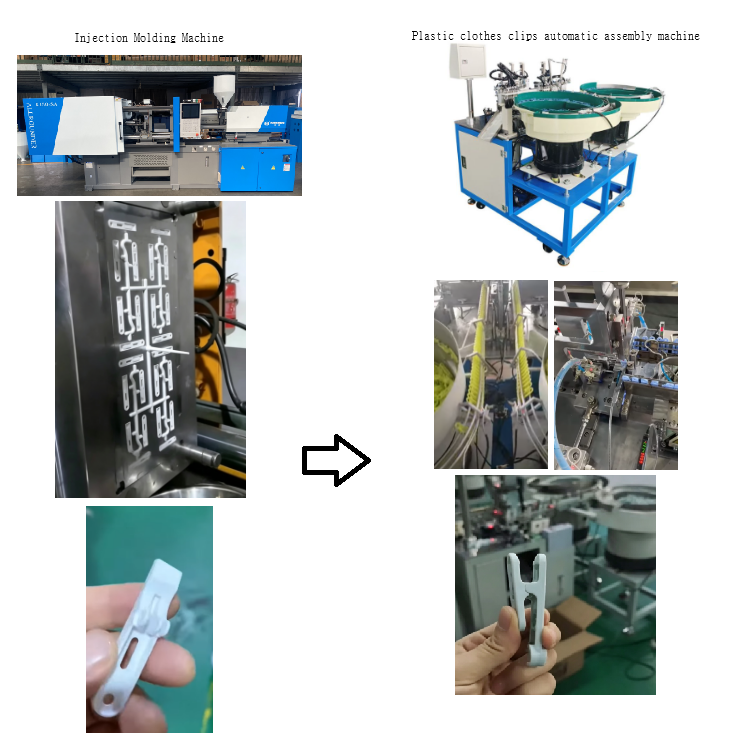
Se A plastic clothespin injection molding machine turns plastic pellets into the clothespins used in households and laundries worldwide. Choosing the right tonnage is not as simple as it looks. Many buyers assume that because clothespins are lightweight, a small machine will do the job. But the real question is not just about part size — it is about cavity count, mold dimensions, and output targets.
Small plastic products like plastic clothespins can be produced using small to medium-sized plastic clothespin injection molding machines with a tonnage of 150-310 tons. A machine that works for a 16‑cavity mold may be completely insufficient for a 48‑cavity high‑volume line. For small clothespins, machines in the 110–310 ton range are common — but the exact number requires careful calculation.
The clamping force you need depends on three factors: the projected area of the part (including runners), the material’s cavity pressure (for PP, typically 300–500 kg/cm²), and the number of cavities you plan to run. More cavities mean higher output but also require more clamping force. This guide explains how to calculate clamping force based on product size and cavity count, the differences between small clothespins and large bedding clips, and how we select tonnage for different production targets. We also walk through a real case from Bolivia using a 32‑cavity mold to show how it all works in practice.
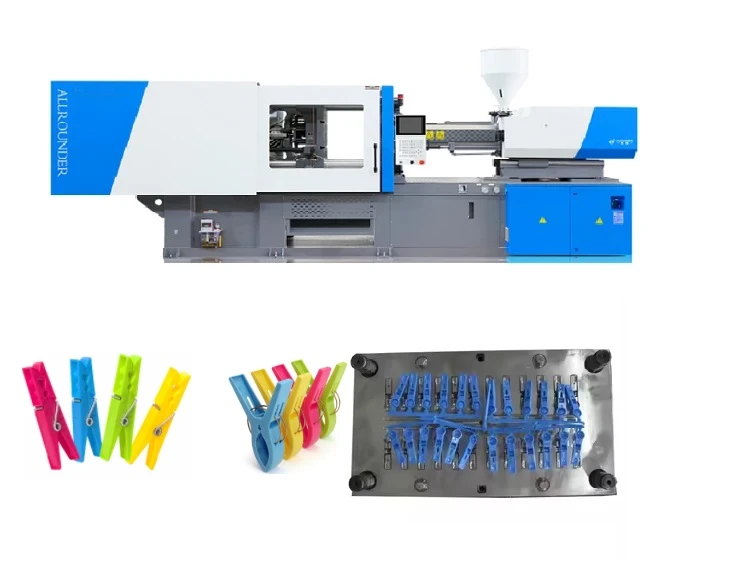
Calculating Injection Molding Machine Tonnage for Clothespin Production
Clamping force prevents the mold from opening during injection. The standard calculation is:
Clamping Force (tons) = Projected Area (cm²) × Cavity Pressure (kg/cm²) ÷ 1000
Where:
-
Projected Area: The area of the part (including runners) on the mold parting line, multiplied by the number of cavities.
-
Cavity Pressure: A material‑specific value. For PP (the most common clothespin material), this is usually 300–500 kg/cm².
Always add a 10–20% safety margin to account for material variations and process fluctuations. This is especially important for a plastic clothespin making machine that runs 24/7.
A practical rule of thumb is that each cm² of projected mold area requires 3–5 tons of clamping force, with an additional 10–20% safety margin. Different materials also have different tonnage factors — for example, ABS may require higher cavity pressure, while glass‑filled nylon may need even more.
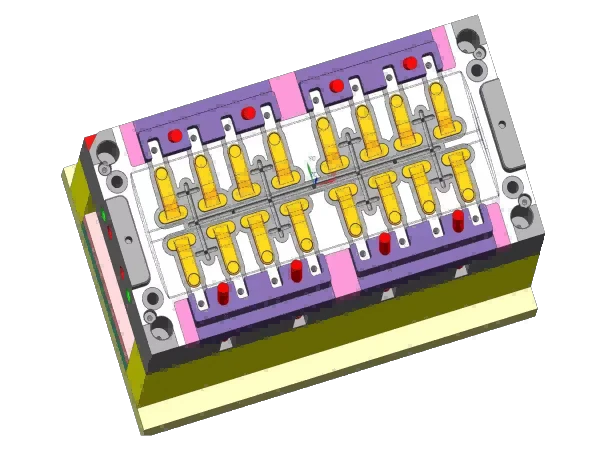
Small Clothespins vs. Large Bedding Clips – Different Tonnage Needs for Your Clothespin Injection Molding Machine
Small Household Clothespins – Lower Tonnage Range
Ordinary clothespins are small and lightweight. A single clothespin has a small projected area, so even with 32 or 48 cavities, the total tonnage stays relatively low. For these products, 110–180 tons is usually sufficient.
A standard PP clothespin measuring about 7×2×1.5cm has a projected area of roughly 14 cm². With a 32‑cavity mold, the total projected area is about 448 cm². At 400 kg/cm² cavity pressure, the theoretical force is about 179 tons. Adding a 15% safety margin brings you to approximately 206 tons — well within the 180–230 ton range.
Large Bedding Clips and Heavy‑Duty Clothespins – Higher Tonnage Requirements
Large bedding clips — used for securing thick blankets, duvets, or heavy winter clothing — are significantly bigger and thicker. A single large clip may weigh 3–5 times more than a standard clothespin and have a much larger projected area.
These products often require higher clamping force, typically in the 230–310 ton range. Heavier, bulkier parts need higher tonnage because they have larger projected areas and thicker walls. For a plastic clothespin injection molding machine producing these larger clips, the injection pressure must be higher to fill the thicker sections, which in turn requires more clamping force to keep the mold closed.
Matching Your Plastic Clothespin Injection Molding Machine to Product Type
| Product Type | Typical Material | Recommended Tonnage | Haichen Model Reference |
|---|---|---|---|
| Small household clothespin | PP | 110–180T | HCK 110 / HCK 150 / HCK 180 |
| Standard clothespin (multi‑cavity) | PP / ABS | 180–230T | HCK 180 / HCK 230 |
| High‑volume clothespin | PP | 180–280T | HCK 230 / HCK 280 |
| Large bedding clip | PP / reinforced PP | 230–310T | HCK 280 / HCK 310 |
How We Calculate and Select Tonnage for Different Cavity Counts and Outputs
The Logic Behind Cavity Count Selection
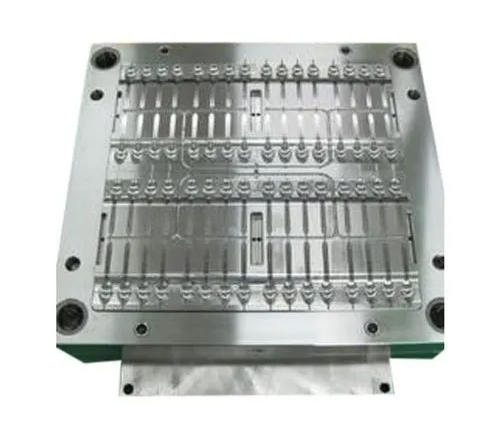
The number of cavities directly affects both output and tonnage. More cavities mean higher productivity but also require a larger injection molding machine and more complex mold cooling. For clothespins, 10 to 20 cavities are often optimal for balancing output and mold complexity. However, for high‑volume production, 32‑cavity or even 48‑cavity molds are common.
More cavities also mean larger molds, which require more clamping force, bigger shot size, and wider tie‑bar spacing on your plastic clothespin injection molding machine. High‑cavity molds are more complex — mold thickness can go from 150mm for a single cavity up to 350mm for multi‑cavity.
Tonnage Reference for Different Cavity Counts
| Cavity Count | Typical Product | Estimated Tonnage | Haichen Model |
|---|---|---|---|
| 16–24 cavities | Small PP clothespin | 110–150T | HCK 110 / HCK 150 |
| 24–32 cavities | Standard PP clothespin | 150–230T | HCK 180 / HCK 230 |
| 32–48 cavities | High‑volume PP clothespin | 180–280T | HCK 230 / HCK 280 |
| 16–24 cavities | Large bedding clip | 230–310T | HCK 280 / HCK 310 |
A higher number of cavities can significantly reduce your per‑unit cost. For a plastic clothespin injection molding machine, the cost per part decreases as you add cavities. Many manufacturers who switch from a 16‑cavity to a 32‑cavity mold see their per‑part cost drop by 30‑40%.
Beyond Tonnage – Other Key Factors for Your Clothespin Injection Molding Machine
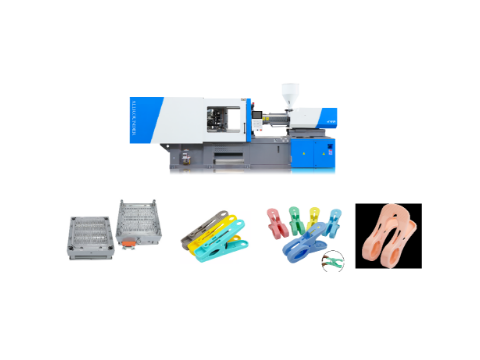
Tonnage is not the only consideration when selecting a plastic clothespin injection molding machine. You also need to check:
Shot weight: The machine must have enough injection capacity for all cavities plus runners. For a 32‑cavity clothespin mold, the total shot weight is typically 250‑350 grams. Your target shot weight should be 30‑80% of the machine’s maximum shot capacity.
Tie‑bar spacing: The mold must fit between the machine’s tie‑bars. A 32‑cavity clothespin mold is approximately 550×450mm — verify that your machine’s tie‑bar spacing accommodates this.
Opening stroke: Deep or tall parts need sufficient stroke for clean ejection. Clothespins are thin, but if your mold has deep features or complex slides, you need enough stroke for clean ejection.
Injection speed: Clothespins are thin-walled parts that need fast injection to fill the cavity before the melt cools. A good plastic clothespin injection molding machine should offer multi‑stage injection speed control.
Haichen’s HCK series plastic clothespin injection molding machines feature servo energy saving as standard, which reduces electricity costs by 30‑50%. Our HCK series machines also come with CE12 robot interfaces for automation integration. All HCK series machines support multi‑cavity molds and offer precise temperature control for consistent part quality.
Real Case – 32‑Cavity Clothespin Project in Bolivia
The Customer and Their Production Goal
A customer in Bolivia planned to produce standard PP clothespins for the local market. Their target was high daily output, so they chose a 32‑cavity mold. They needed a plastic clothespin injection molding machine that could deliver consistent quality at high speed.
The customer initially considered a smaller machine to save on investment. However, after our analysis, they realized that a 32‑cavity mold requires a larger machine to avoid flash and short‑shots.
How We Guided the Tonnage Selection
First – Product Analysis
-
Material: PP (cavity pressure ≈ 400 kg/cm²)
-
Single clothespin size: approximately 7×2×1.5cm
-
Projected area per cavity: ~14 cm²
-
Total projected area (32 cavities): ~448 cm²
-
Runner system added approximately 15% more area → ~515 cm²
Second – Tonnage Calculation
-
Theoretical force: 515 cm² × 400 kg/cm² ÷ 1000 = 206 tons
-
15% safety margin: 206 × 1.15 = 237 tons
Third – Machine Selection
Based on the calculation, we recommended the HCK 230 (230 tons clamping force). This model provided enough margin for stable production while keeping investment costs reasonable. The HCK 230 proved to be an excellent plastic clothespin making machine for this application.
Fourth – Additional Considerations
-
Tie‑bar spacing: We verified that the 32‑cavity mold (approximately 550×450mm) fit within the HCK 230’s tie‑bar spacing (570×520mm).
-
Shot weight: The total shot weight (32 clothespins + runners, about 250–300g) was well within the machine’s capacity.
-
Cooling design: We optimized the mold’s cooling channels to shorten cycle time and prevent deformation.
Fifth – Results
The HCK 230 delivered stable cycle times of approximately 12–15 seconds, producing over 180,000 clothespins per day (24‑hour operation). The customer achieved a yield rate above 97%, and the machine’s servo energy‑saving system reduced electricity consumption by 30‑50% compared to traditional hydraulic machines.
Key Takeaway from the Bolivia Case
The Bolivia case shows that proper tonnage calculation is not just about the formula — it is about understanding the whole picture: product size, material behavior, cavity count, mold design, and auxiliary systems. By using the projected area method with a safety margin, we helped the customer avoid both undersizing (which would cause flash and defects) and oversizing (which wastes investment).
The customer’s success with the HCK 230 demonstrates that the right plastic clothespin injection molding machine can deliver high output, low scrap rates, and excellent energy efficiency. The customer has since recommended Haichen to other manufacturers in Bolivia.
Frequently Asked Questions
What is a plastic clothespin injection molding machine?
A plastic clothespin injection molding machine melts plastic pellets and injects them into a mold to form clothespins and clips. The machine heats the plastic, injects it under high pressure, cools it, and ejects the finished clothespins. These machines are designed for high‑speed, multi‑cavity production.
What is the typical cycle time for clothespin injection molding?
Cycle times vary by machine and mold. For clothespins, typical cycle times are 12–20 seconds depending on wall thickness and cooling design. Thinner walls cool faster; thicker designs need more time. A 32‑cavity mold typically runs at 12–15 seconds.
How many cavities should my clothespin mold have?
It depends on your output target. For high‑volume production, 32 cavities is the sweet spot. 16 cavities for medium volume, 8 for low volume or complex designs. Some manufacturers run 48 cavities for ultra‑high production.
What materials are best for clothespin injection molding?
Common materials include PP (polypropylene) for most clothespins, ABS for premium clips, and reinforced PP for heavy‑duty bedding clips. PP is the most common choice due to its balance of strength, flexibility, and cost.
How much does a clothespin injection molding machine cost?
Costs vary by configuration and tonnage. A plastic clothespin injection molding machine in the 110‑310 ton range typically costs between $30,000 and $150,000 depending on configuration and auxiliary equipment (mold, chiller, dryer, robot). Always budget 20‑30% above the machine price for auxiliary gear. Contact Haichen for current pricing based on your specific requirements.
Haichen Machinery – your plastic clothespin injection molding machine partner. From HCK 110 to HCK 310, we help you get the right tonnage for your clothespin production.

Author: Yang, Senior Engineer, Haichen Machinery