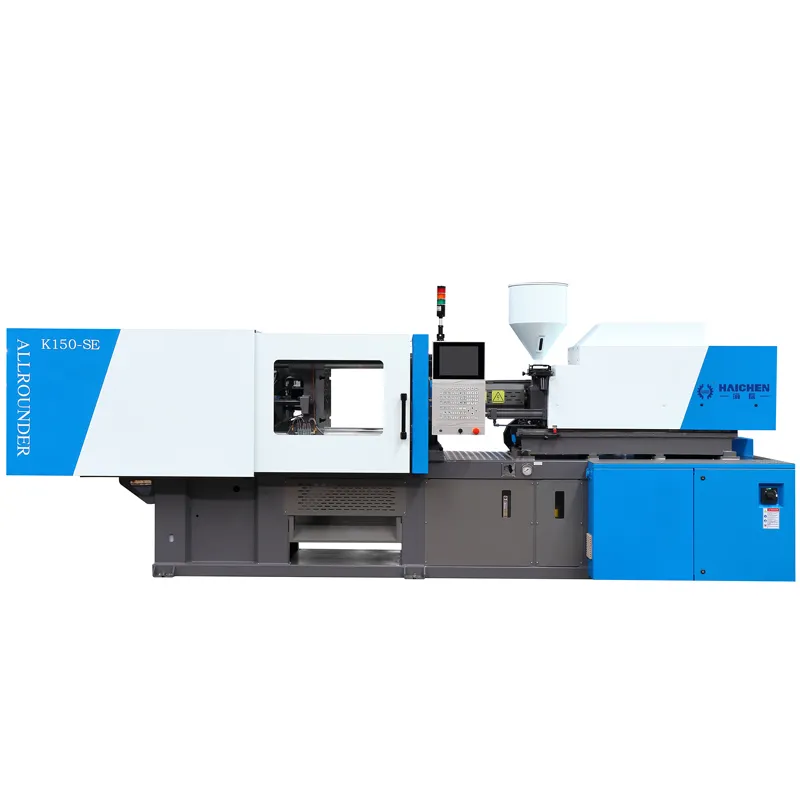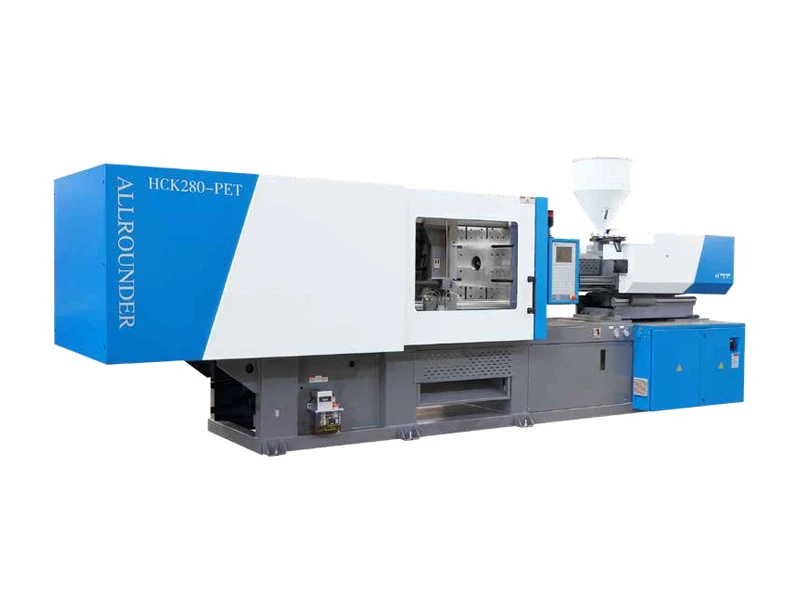
When a plastic product needs two colors or combines rigid and soft materials, manufacturers often consider two-shot injection molding and overmolding. Both processes can create products with more than one material, but they use different production methods.
The right choice depends on the product design, material compatibility, mold investment, production volume, and required part quality. A process that works well for a high-volume power tool handle may not be the most cost-effective option for a small production run.
So, what is the difference between two-shot injection molding vs overmolding? When should you consider a two-color injection molding machine, and when is a separate overmolding operation worth evaluating?
This guide compares the two approaches and explains how to evaluate cost, cycle time, tooling, and machine requirements before starting a new project.
What Is Two-Shot Injection Molding?
Two-shot injection molding, also called 2K injection molding or two-color injection molding, forms a part by injecting two materials or colors in a planned sequence within an integrated molding cycle.
A typical two-shot machine has two injection units. Each unit prepares and injects its own material. The mold then uses a suitable transfer mechanism, such as a rotary platen or another cavity-changing design, to position the part for the next injection.
For example, a manufacturer may first mold the rigid body of a handle and then add a soft-touch material to the grip area. Both materials become parts of the same finished component.
How Does the Two-Shot Process Work?
The process usually follows these steps:
- The first injection unit fills the first mold cavity with the base material.
- The mold transfers the part or changes its cavity configuration.
- The second injection unit injects the next material into the required area.
- The mold cools the part before ejection.
The exact sequence depends on the machine and mold design. In a rotary-platen system, the mold can rotate between injection positions. Other designs may use core-back movement or a different transfer method.
Common Applications of Two-Shot Injection Molding
Two-shot injection molding can be suitable for products that need two colors, two material properties, or a functional interface between materials.
Typical applications include:
- Power tool handles with rigid bodies and soft grips.
- Toothbrush handles with two colors or different material zones.
- Automotive interior components with decorative and functional sections.
- Electronic buttons and control components.
- Household products that combine rigid plastic with a flexible area.
However, not every two-material product needs a two-shot machine. A separate overmolding process may offer a better solution when production volume is low, the design is still changing, or an existing manufacturing system can handle the extra operation efficiently.
What Is Overmolding?
Overmolding is a process in which a second material is molded over an existing substrate. The substrate may be a previously molded plastic part or, in some applications, a metal or other insert.
A common method is to mold the base part first, remove it from the first mold, and place it into a second mold. The second molding operation then adds another material to selected areas.
For example, a manufacturer can mold a rigid handle body, move it to another tool, and inject a soft material over its grip surface.
Overmolding can use separate injection molding machines, manual loading, robotic handling, or an integrated automated production system. Therefore, the term does not mean that every overmolding project requires two separate machines or manual work.
Why Do Manufacturers Use Overmolding?
Overmolding can offer useful flexibility. It allows the base component and overmold to be designed, tested, or produced in separate operations.
This approach may suit manufacturers that already have a suitable molding machine for the substrate. It can also be useful when the product design is still developing or when the production volume does not justify a more complex two-shot mold.
However, the second operation adds requirements for part handling, positioning, and process control. These factors can affect the cycle time, labor cost, and consistency of the finished product.
Two-Shot Injection Molding vs. Overmolding: What Are the Main Differences?
The main difference lies in how the two materials are combined during production.
In a typical integrated two-shot process, the machine handles both injections as part of one coordinated molding cycle. In a separate overmolding process, the base part is completed first and then receives the second material in another operation.
The following table summarizes the key considerations.
| Comparison | Two-Shot Injection Molding | Separate Overmolding Operation |
|---|---|---|
| Production method | Two materials are injected through an integrated process | The substrate is molded first and then overmolded |
| Machine setup | Requires equipment designed for the two-shot process | May use a conventional machine for each molding stage |
| Mold investment | Often requires a more complex multi-material mold | Requires substrate and overmold tooling, with complexity depending on the design |
| Part handling | May reduce separate transfer and loading steps | Requires substrate transfer or an equivalent handling system |
| Cycle time | Can combine operations into one coordinated cycle | Includes the additional overmolding stage |
| Automation | Can integrate both injections and part transfer | Can also be automated, depending on the equipment layout |
| Design changes | Tool changes can affect the integrated mold system | Separate tooling may allow changes to one stage without changing the other |
| Cost at production scale | May benefit from fewer handling steps at stable, high output | May be attractive when tooling investment and production flexibility matter more |
| Material bonding | Depends on material compatibility, interface design, and process conditions | Also depends on material compatibility, surface condition, and process conditions |
These are general tendencies rather than fixed rules. The correct comparison must use the actual product design, mold concept, machine layout, and production assumptions.
Compare the Initial Machine and Mold Investment
Equipment and tooling costs are important when selecting a molding process. However, comparing only the price of the injection molding machine may lead to the wrong decision.
Initial Investment for Two-Shot Injection Molding
A two-shot solution may require a dedicated machine with two injection units and a mold designed for the selected transfer mechanism. Depending on the application, the mold may include a rotary platen arrangement, special cavity structures, or other mechanisms.
The initial investment can therefore be higher than that of a simple single-material molding setup.
Before comparing quotations, confirm the machine’s injection unit specifications, clamping force, mold dimensions, transfer mechanism, and required control functions. Also check which automation and auxiliary equipment are included.
Initial Investment for Overmolding
A separate overmolding route requires tooling for the substrate and for the second material. The production system may use existing machines, which can reduce the need for a new dedicated press.
However, existing equipment is only an advantage if it is suitable for the required mold, material, and output. The extra tooling, part handling, and operation must still be included in the calculation.
Which Option Has the Lower Initial Cost?
There is no universal answer. A simple overmolding project may need less specialized initial equipment, while a complex overmold can require costly tooling and automation. A two-shot project may have a higher initial investment but fewer separate production steps.
Request complete quotations for both routes and compare them using the same product specifications.
Compare Cycle Time and Production Efficiency
Cycle time has a direct effect on output and machine cost per part. However, the shortest machine cycle does not always produce the lowest total manufacturing cost.
Cycle Time in Two-Shot Injection Molding
The two-shot process includes the first injection, mold transfer or cavity movement, second injection, cooling, opening, and ejection.
The actual cycle depends on the material properties, part geometry, wall thickness, mold cooling, and machine settings. Some operations may overlap, depending on the machine and mold design.
For stable, high-volume production, an integrated two-shot process may reduce the need for separate part handling between the two material stages.
Cycle Time in Overmolding
A separate overmolding process must account for the time required to produce the substrate, transfer or load it into the overmold tool, position it correctly, inject the second material, cool the part, and remove it.
Automation can reduce handling time and labor. Still, the full production sequence must be considered when calculating the output of the line.
Calculate Actual Good-Part Output
When comparing the two processes, use the following information:
- Cycle time for each molding stage.
- Number of cavities in each mold.
- Expected machine utilization.
- Handling and transfer time.
- Scrap and rework rates.
- Time required for mold changes and maintenance.
A reliable estimate should be based on good parts per hour, not just the theoretical output of the injection molding machine.
Material Compatibility and Bond Strength
Both two-shot injection molding and overmolding depend on the interface between the materials.
A rigid base and a soft-touch material may look attractive together, but appearance alone does not prove that the materials will bond reliably.
Check Material Compatibility Before Selecting the Process
Different polymer combinations behave differently. Some material pairs can form a strong bond under suitable molding conditions. Others have limited chemical adhesion and may require special grades or a mechanical interlock.
For example, a suitable TPE grade may bond to a compatible rigid plastic. However, not every TPE grade bonds equally well to every base polymer.
Check the material manufacturer’s compatibility data and processing recommendations. Then confirm the proposed material pair through testing.
Design the Interface for the Product’s Function
The interface must withstand the forces expected during use. A decorative color boundary may have different requirements from a grip that experiences repeated pulling or a component that must maintain a seal.
The product designer and mold maker should consider the contact area, wall geometry, mechanical locking features, shrinkage, and expected loading.
A well-designed interface can improve reliability, but neither process automatically guarantees a stronger bond. Material selection and process validation remain essential.
Which Process Offers Better Product Quality?
Product quality includes appearance, dimensions, bonding, repeatability, and the absence of defects.
Two-shot injection molding can offer consistent positioning between material sections when the machine and mold control the transfer accurately. It can be useful for parts that need a defined boundary between two colors or a closely controlled material interface.
Overmolding can also produce high-quality results. Its performance depends on how the substrate is positioned, how the second material fills the cavity, and how the two materials interact.
Common Quality Issues
Possible problems include:
- Weak bonding between the two materials.
- Flash at the material boundary.
- Short shots or incomplete filling.
- Dimensional variation or warpage.
- Surface defects and inconsistent color boundaries.
- Damage or contamination during substrate handling.
The right process should be selected based on the product’s quality requirements and validated with mold trials. If the interface is critical to safety, sealing, or long-term durability, include appropriate testing in the project plan.
When Does Two-Shot Injection Molding Make More Sense?
Two-shot injection molding is worth evaluating when the product and production plan benefit from an integrated process.
Consider it when:
- The product has two material sections that must be formed in a coordinated sequence.
- A stable, high production volume can support the investment in specialized tooling.
- Reducing separate handling and loading steps matters to production efficiency.
- The design requires controlled positioning between colors or materials.
- The mold, materials, and machine can be designed as one coordinated system.
For example, a manufacturer producing a large volume of two-material handles may find that an integrated two-shot system reduces repeated handling and makes production easier to automate.
That does not mean two-shot molding is always cheaper. The tooling investment, material compatibility, and required output must still justify the choice.
When Is Overmolding Worth Considering?
A separate overmolding process may be more suitable when flexibility or initial investment is a higher priority than integrating both molding stages.
Consider it when:
- The product design is still changing.
- Production volume is low or uncertain.
- A suitable machine for the substrate is already available.
- The base part must be produced and inspected separately.
- The extra handling and cycle time are acceptable.
- Separate tooling makes product changes easier to manage.
For example, a manufacturer developing a new grip may first produce substrate parts and test several overmold materials or shapes. If demand later becomes stable and production volume increases, the team can compare the cost of transferring the product to a dedicated two-shot system.
The best choice depends on the complete project, not a general rule about which process is better.
How to Compare the Total Cost per Good Part
A sound cost comparison should include both the initial investment and the cost of running production.
Calculate the Total Project Cost
Include the following items:
- Injection molding machine investment.
- Mold design, manufacturing, and maintenance.
- Installation and automation.
- Material consumption and waste.
- Labor and part handling.
- Energy and auxiliary equipment.
- Scrap, inspection, and rework.
- Production downtime and mold changes.
Use the same production volume and quality requirements for both options. Otherwise, the comparison may favor the process with unrealistic assumptions.
Estimate Machine Cost per Good Part
A simple starting point is:
Machine cost per good part = Hourly machine cost × Cycle time in seconds ÷ (3,600 × Good parts per cycle)
For a separate overmolding line, calculate the cost of each molding stage and any additional handling costs. For a two-shot machine, calculate the integrated cycle using the actual good-part output.
Add material, labor, tooling amortization, and other costs that are not already included in the hourly machine rate.
Calculate the Break-Even Production Volume
You can also estimate the volume at which a higher initial investment becomes worthwhile.
When the two-shot option has higher initial tooling and equipment costs but lower variable cost per part, the basic break-even calculation is:
Break-even units = Additional initial investment ÷ Savings per part
For this calculation, additional initial investment means the difference between the two project investments. Savings per part means the difference in variable cost per good part.
For example, if the two-shot route requires a higher upfront investment but saves money on each good part, the break-even volume indicates how many parts must be produced before those per-part savings cover the additional investment.
If there is no positive per-part saving, this calculation does not produce a meaningful break-even point. In that case, compare other benefits such as quality, production flexibility, lead time, and process risk.
How to Choose the Right Two-Color Injection Molding Machine
If the comparison shows that an integrated two-shot process fits your product, the next step is to select a suitable machine and mold configuration.
Check the Two Injection Units
Calculate the required shot size for each material separately, including runners where applicable. Then check injection pressure, speed, plasticizing capacity, and screw suitability for the selected material grades.
Confirm Clamping Force and Mold Compatibility
The machine must provide sufficient clamping force and accommodate the complete mold structure. Check mold dimensions, tie-bar spacing, opening stroke, ejection, and any required core-pulling functions.
Review the Mold Transfer Mechanism
Confirm whether the application requires a rotary platen, core-back movement, or another transfer arrangement. The machine and mold must work together throughout the molding cycle.
Review Controls and Automation
Check the control functions needed for the injection sequence and mold movement. Also evaluate whether a robot or other automation is needed for part removal and further handling.
Haichen’s Multi-Color Injection Molding Machine page describes a two-injection-unit configuration, rotary-platen options, injection process controls, PID temperature control, mold protection, and a manipulator interface. The exact configuration should be confirmed for the selected model and application.
How Haichen Can Support Your Two-Color Injection Molding Project
Haichen supplies injection molding machines and multi-color molding solutions for different plastic product applications.
When you evaluate a two-color injection molding machine, the starting point should be your product rather than a generic machine specification. The required injection units, mold structure, clamping force, and controls all depend on the product and production plan.
Before requesting a quotation, prepare your product drawing or sample, material grades, shot weight for each material, mold dimensions, cavity count, and target output.
Haichen can review these details with you and discuss a machine configuration that fits your project requirements.
Explore the Haichen Multi-Color Injection Molding Machine page for more information.
Planning a new two-material plastic product?
Contact Haichen to discuss your product design, production volume, and equipment requirements. Comparing the process and cost before making the tooling decision can help you avoid unnecessary investment.
Website: https://www.haichen-imm.com/
Frequently Asked Questions
Is two-shot injection molding the same as overmolding?
Not exactly. Overmolding is the broader process of molding one material over an existing substrate. Two-shot injection molding is an integrated method that injects two materials in a coordinated molding cycle. Therefore, two-shot molding can be one way to produce an overmolded component.
Is two-shot injection molding always more expensive?
No. It may require a higher initial investment in the machine and mold, but it may reduce separate handling and production costs at sufficient volume. The result depends on the product, tooling, output, and material requirements.
Can overmolding be automated?
Yes. Robots and integrated handling systems can transfer substrates and support repeatable production. The level of automation depends on the part design, machine layout, and investment plan.
Which process is better for high-volume production?
Two-shot injection molding can be attractive when demand is stable and the integrated process reduces handling or cycle time. However, the best choice should be based on a cost and process comparison for the specific product.
How do I know whether two materials will bond?
Check compatibility data for the exact material grades, review the interface design, and carry out appropriate testing. The process name alone cannot guarantee bond strength.
What information should I provide when requesting a machine quotation?
Provide product drawings or samples, material grades, weight of each material, mold dimensions, cavity count, target output, and automation requirements. These details help the supplier evaluate the proposed process and machine configuration.