
Plastic caps may look simple, but their molding requirements can vary significantly.
A cap can include threads, sealing areas, thin walls, snap structures or tamper-evident features. These details affect filling, cooling and demolding.
At the same time, cap production often uses multi-cavity molds because one molding cycle can produce several parts.
Therefore, a plastic cap injection molding project needs more than a machine with enough clamping force. The product, mold and production target should work together.
A practical selection process is:
Cap → Mold → Machine → Production Target
This approach helps buyers avoid choosing a machine from the cap size alone.
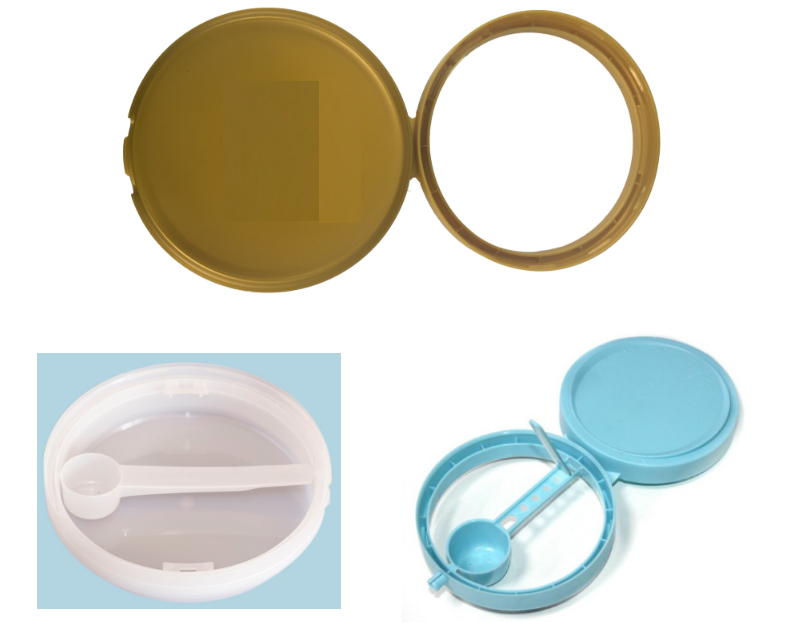
What Information Do You Need Before Choosing a Machine?
Before asking an injection molding machine manufacturer for a quotation, prepare the basic information about the cap and mold.
Useful information includes:
- Cap drawing or sample
- Cap dimensions
- Cap weight
- Plastic material
- Number of cavities
- Hot runner or cold runner
- Mold dimensions
- Mold weight
- Production target
- Expected cycle time, if known
- Existing machine information, if available
You may not have all of this information at the beginning. That’s okay.
For an existing mold, the mold drawing and machine requirements can provide a useful starting point.
For a new project, the manufacturer can check the product and mold design before recommending the machine.
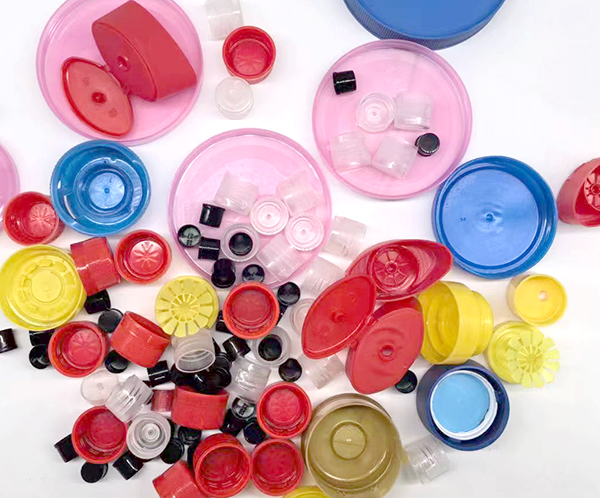
Real Case: 4-Cavity Large Milk Powder Cap Mold
Haichen has a real mold case for a large milk powder cap.
The available project data is:
| Item | Specification |
|---|---|
| Product | Large milk powder cap |
| Material | PP or PE |
| Number of cavities | 4 |
| Runner system | Hot runner |
| Cavity steel | H13 |
| Core steel | S136 |
| Mold base | P20 |
| Matching machine | 450T |
| Mold life | About 3 million shots |
This case provides a useful reference for understanding machine and mold matching.
The mold has four cavities and uses a hot runner system. It also uses different steel specifications for the cavity, core and mold base.
Most importantly, this mold matches a 450T injection molding machine.
However, this does not mean every milk powder cap or every four-cavity cap requires a 450T machine. The machine selection belongs to this specific product and mold configuration.
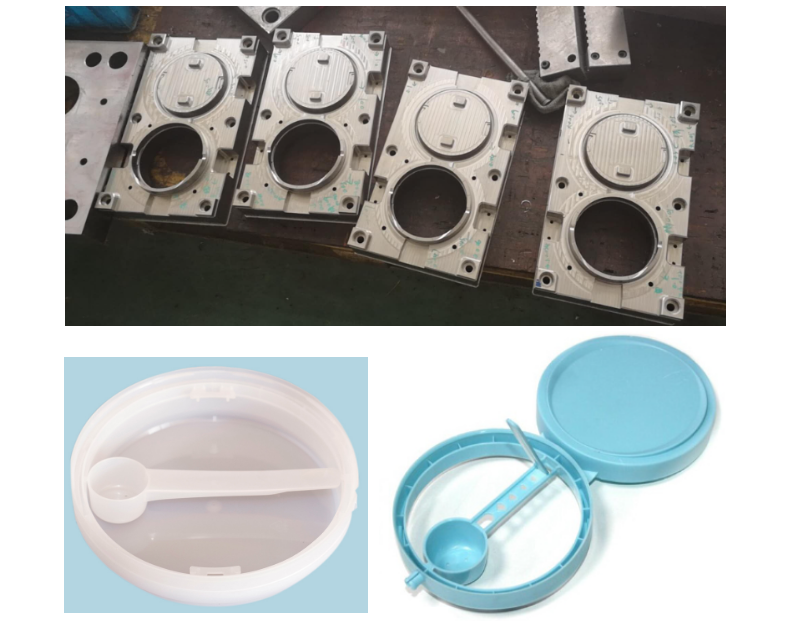
What Determines the Machine Size for a Plastic Cap Mold?
Machine size should come from the complete molding requirements.
Cavity number
The number of cavities affects how much plastic the mold needs to fill during each cycle. More cavities also change the mold layout.
For example, the Haichen case uses four cavities. The machine therefore needs to work with the complete four-cavity mold rather than one finished cap.
Projected area
The projected area of the molded parts and mold layout affects the clamping requirement.
This is one reason why product size alone cannot determine the required machine tonnage.
Injection requirements
The injection unit needs to provide enough shot capacity and injection performance for the selected material and mold.
For multi-cavity production, the manufacturer should consider the total material requirement for the complete shot.
Mold dimensions
The mold must physically fit the machine.
The manufacturer should check factors such as:
- Mold width and height
- Tie-bar spacing
- Mold thickness
- Mold opening requirements
- Ejection arrangement
Production target
A machine selection should also match the required production volume.
A customer producing a few thousand caps per month may have different equipment requirements from a factory running a high-volume multi-cavity mold.
So, rather than asking only:“How many tons do I need for this cap?”
a better question is:“What machine matches this cap mold and production target?”
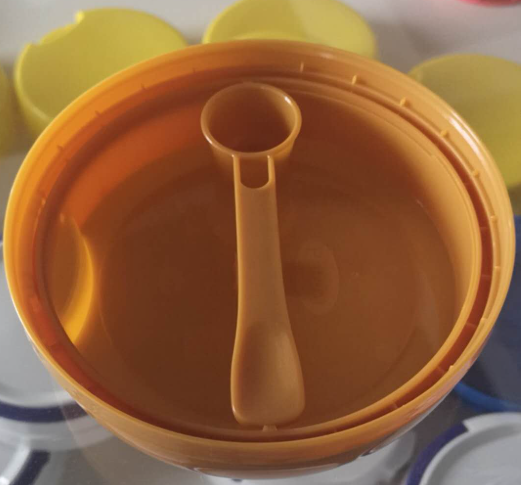
| Item | Product Data |
| Product | Plastic Milk Powder Cap |
| Material | Food-grade PP |
| Diameter | 131 mm |
| Height | 33 mm |
| Color | According to sample |
| Application | Milk powder, protein powder, etc. |
| Structure | Lid and cap connected |
| Product weight | About 52 g |
Why Use a Hot Runner for Plastic Caps?
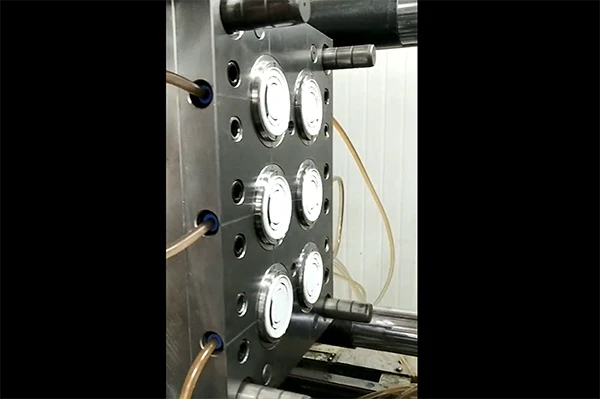
The large milk powder cap mold in the Haichen case uses a hot runner system.
A hot runner keeps the runner system heated during molding.
For a multi-cavity cap mold, this type of system can help deliver molten plastic to multiple cavities without creating a conventional cold runner for each molding cycle.
Potential advantages include:
- Less cold runner waste
- Suitable material distribution for multi-cavity molds
- More direct control of gate locations
- A useful option for higher-volume production
However, a hot runner is not automatically the right choice for every cap mold.
The decision depends on the cap design, material, cavity number, gate arrangement, production volume and mold cost.
For this reason, the runner system should be selected together with the mold design.
How Do PP and PE Affect Cap Molding?
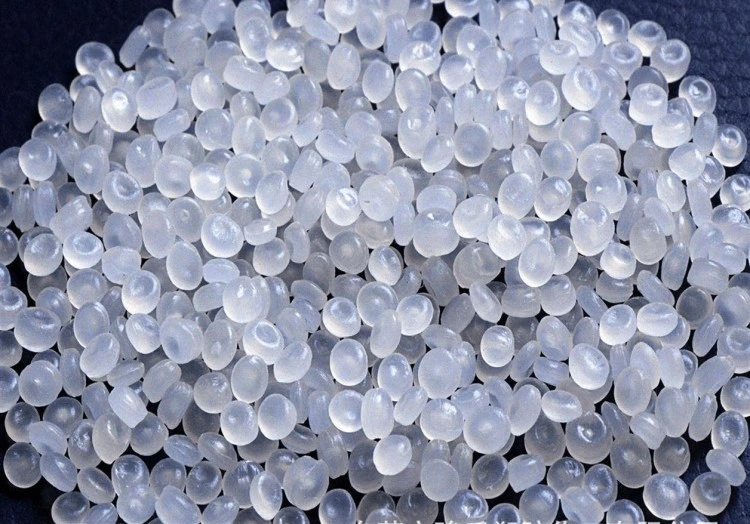
The Haichen milk powder cap case uses PP or PE.
Both materials can be used in plastic products, but the actual molding conditions depend on the material grade and product design.
When you request a machine quotation, it is better to provide the exact material grade if you have it.
The manufacturer can then evaluate the material together with:
- Product weight
- Cavity number
- Mold structure
- Shot requirement
- Production target
This information makes the machine recommendation more specific.
In other words, simply saying “PP cap” gives less information than providing the actual material grade and product data.
What Should You Check in a Plastic Cap Mold?
The mold deserves as much attention as the injection molding machine.
Before ordering the machine or mold, check the following points.
Cavity layout
Confirm the number of cavities and how they are arranged.
The cavity layout affects mold size, material distribution and production capacity.
Runner system
Confirm whether the mold uses a hot runner or cold runner.
For the Haichen milk powder cap case, the mold uses a hot runner.
Cavity and core steel
The real Haichen mold uses:
- H13 for the cavity
- S136 for the core
- P20 for the mold base
Different mold components can use different steel specifications according to their functions and project requirements.
Cooling system
The cooling system affects the time needed for the molded cap to reach a suitable condition for ejection.
A well-designed cooling system also supports stable production.
Ejection system
The mold should release the finished cap without damaging the product.
This becomes especially important when the cap has threads, sealing structures or other detailed features.
Mold life
The Haichen case specifies a mold life of about 3 million shots.
This figure belongs to this particular mold specification.
It should not become a universal service-life promise for every plastic cap mold.
How to Calculate Theoretical Plastic Cap Output
The number of cavities and cycle time determine the basic theoretical output.
Use this formula:
Theoretical output = Number of cavities × 3600 ÷ Cycle time
For example, suppose a four-cavity mold runs at a hypothetical 20-second cycle:
4 × 3600 ÷ 20 = 720 caps/hour
This is only a theoretical calculation.
Actual production can be lower because of:
- Machine setup
- Mold maintenance
- Material changes
- Quality inspection
- Production stops
- Operator work
- Other downtime
The available data for the Haichen milk powder cap mold does not include an actual cycle time, so we do not assign a production figure to this project.
How Do You Compare Plastic Cap Injection Molding Machine Quotations?
When several suppliers send quotations, do not compare only the machine price or tonnage.
Instead, check whether each machine actually matches your mold.
| Item | What to Check |
|---|---|
| Clamping force | Is it suitable for the mold? |
| Tie-bar spacing | Can the mold fit between the tie bars? |
| Mold height | Is the mold within the machine range? |
| Injection unit | Does it match the required shot? |
| Screw configuration | Is it suitable for the material and application? |
| Ejection | Does it match the mold? |
| Machine configuration | Does it suit the production requirements? |
| Mold support | Can the supplier check the machine-mold combination? |
| Service | What technical support is available? |
A lower machine price does not necessarily mean a lower total production cost.
More importantly, the machine should match the actual mold and production requirements.
Can One Injection Molding Machine Produce Different Plastic Caps?
Yes, when the different molds meet the machine’s specifications.
A machine can potentially work with different cap molds if the molds fit its:
- Mold dimensions
- Tie-bar spacing
- Mold height range
- Clamping requirements
- Injection requirements
- Ejection system
However, changing the product does not mean that every mold will automatically work on the same machine.
The correct approach is to check each new mold before production.
This can also help factories use one machine for different products when their production schedules and mold specifications allow it.
What Should You Send to an Injection Molding Machine Manufacturer?
If you want a machine quotation for plastic cap production, send the manufacturer as much of the following information as possible:
Product information
- Product drawing
- Product photo
- Product dimensions
- Product weight
- Cap type
Material information
- PP, PE or another material
- Material grade, if available
Mold information
- Number of cavities
- Hot runner or cold runner
- Mold dimensions
- Mold weight
- Mold drawing, if available
- Existing machine information
Production information
- Required production volume
- Working hours
- Expected cycle time, if known
You don’t need to prepare a complicated technical document before contacting a supplier.
Even a product drawing, material and cavity number can give the manufacturer a useful starting point.
Machine and Mold Support for Plastic Cap Production
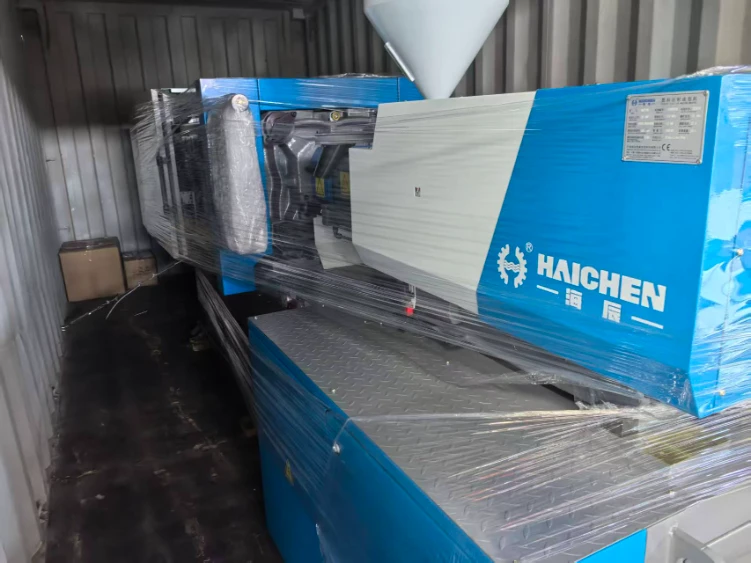
For a plastic cap project, the machine and mold should not be considered as two completely separate purchases.
The mold determines the cavity layout and molding requirements. The machine then needs to provide the appropriate clamping and injection performance.
The real Haichen milk powder cap case demonstrates this relationship:
Large milk powder cap → 4 cavities → PP/PE → hot runner → H13/S136/P20 mold → 450T machine
The mold also has a specified life of about 3 million shots.
This type of real project data provides a better reference than a general statement such as “small caps need small machines.”
If a customer already has a mold, the machine manufacturer can evaluate the existing mold information. If the customer needs both a machine and mold, the two can be considered together from the beginning.
Plastic Cap Injection Molding Machine Buying Checklist
Before placing an order, check these points:
Product
- Cap drawing or sample
- Product weight
- Product dimensions
- Material and grade
Mold
- Cavity number
- Hot runner or cold runner
- Mold dimensions
- Mold steel
- Cooling system
- Ejection system
- Mold life requirement
Machine
- Clamping force
- Tie-bar spacing
- Mold height
- Injection unit
- Shot requirement
- Ejection compatibility
Production
- Target output
- Expected cycle time
- Working hours
- Auxiliary equipment
- After-sales support
Frequently Asked Questions
What machine is used to make plastic caps?
The required machine depends on the cap, material, cavity number, mold design and production requirements. A specific machine tonnage should come from the complete mold and product data.
Can PP or PE be used for plastic caps?
Yes. The Haichen large milk powder cap mold case uses PP or PE. The exact molding conditions depend on the material grade and product design.
Is a hot runner suitable for plastic cap molds?
A hot runner can be suitable for multi-cavity cap molds, especially when the project requires high production volume. The final choice depends on the mold and production requirements.
Why can a small cap require a relatively large machine?
The finished cap is only one part of the calculation. Cavity number, mold layout, projected area, injection requirements and mold dimensions also affect machine selection.
How do I calculate theoretical cap production?
Use:
Cavities × 3600 ÷ Cycle time
The result is theoretical output rather than guaranteed actual production.


