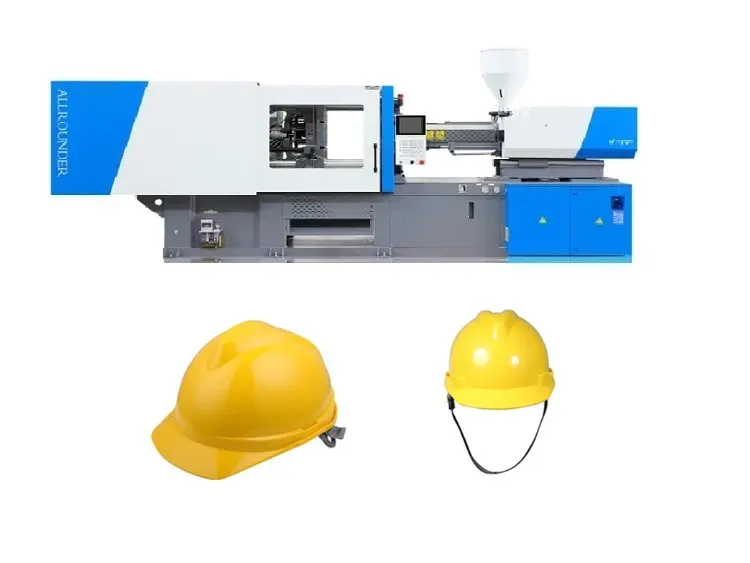
The helmet shell absorbs and spreads impact force. Its wall thickness and the machine’s clamping force directly affect whether the shell passes impact tests.
A hemelt shell that is too thin deforms too much. While, a plastic helmet shell that is too thick adds weight without improving protection.
Clamping force determines whether the mold stays closed during injection. This article explains how wall thickness and clamping force work together to meet impact performance requirements.
What Wall Thickness Do Helmet Shells Typically Use?
Most injection-molded helmet shells use a wall thickness between 2.5 mm and 4.5 mm. Thinner shells reduce weight but deform more under impact. Thicker shells beyond 8 mm add weight without proportional protection gains. A uniform wall thickness is more important than a thick wall in one area.
What is the standard wall thickness range for motorcycle and bike helmet shells?
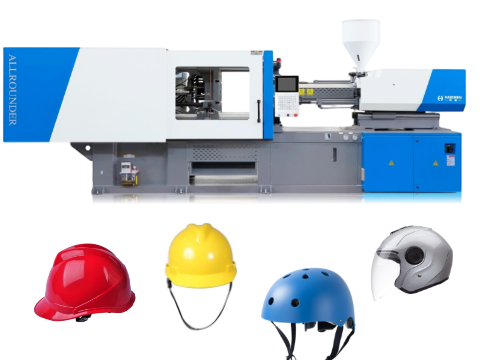
Injection-molded helmet shells commonly range from 2.5 mm to 4.5 mm in wall thickness. This range balances impact strength and weight. A shell below 2.5 mm may fail deformation tests. A shell above 4.5 mm adds weight without a proportional gain in protection. Bike helmet shells often sit at the lower end of this range because riders accept lighter protection. Motorcycle helmet shells sit toward the middle to upper end because impact speeds are higher.
How does wall thickness variation affect impact performance?
A uniform wall thickness matters more than a single thick section. Uneven thickness creates stress concentration points. These points become crack initiation sites during impact. Thick sections also cool slower than thin sections. Slow cooling causes internal voids and sink marks. Voids reduce the shell’s energy absorption capacity. The impact force passes through the void area instead of spreading across the shell surface.
How does Haichen support thin-wall helmet shell molding?
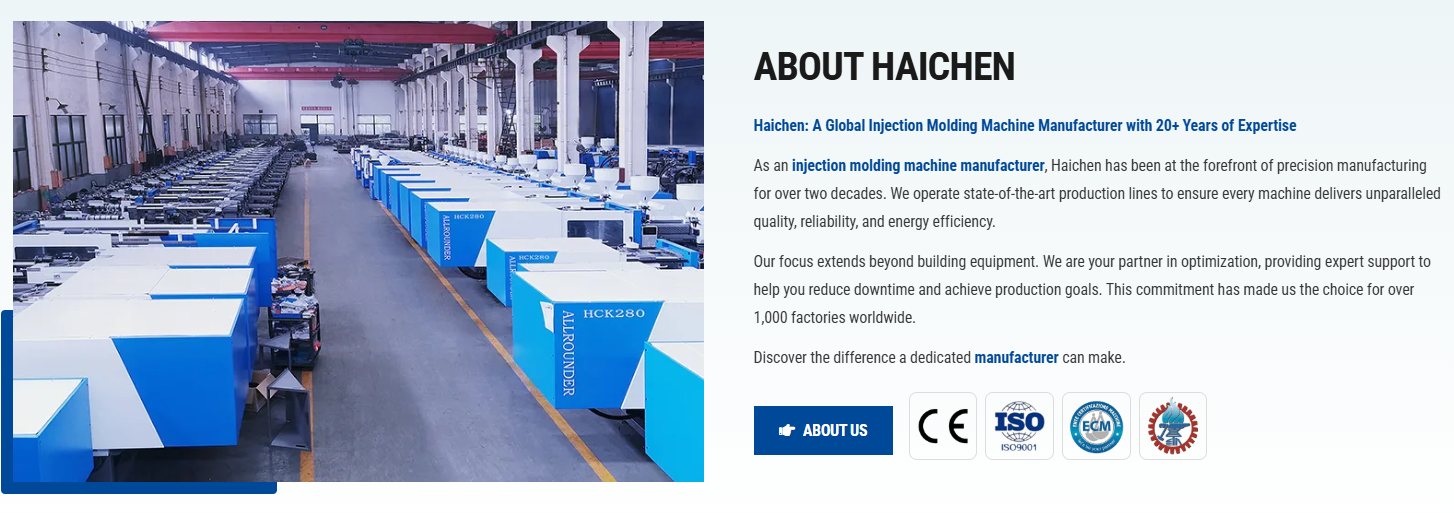
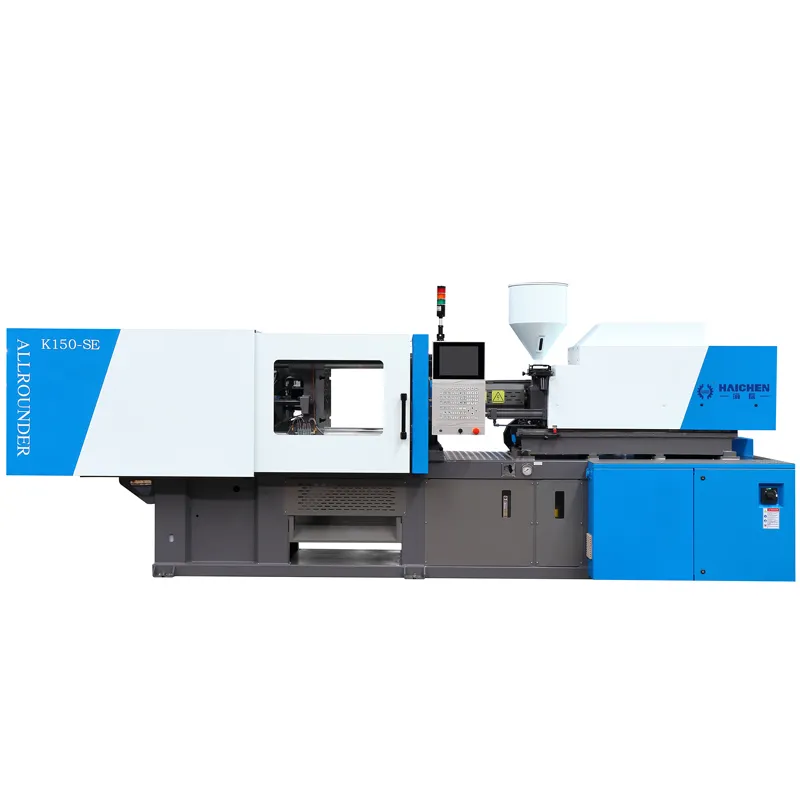
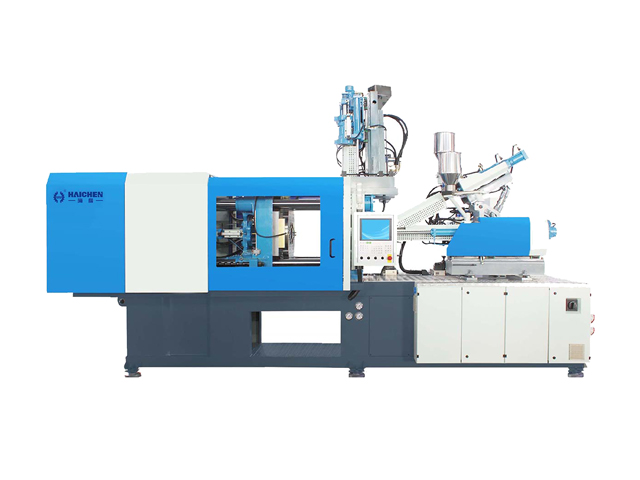
Haichen builds the HCK460 with a 4600 kN clamping force and screw options of 75 mm, 80 mm, and 85 mm. Injection weight reaches up to 2,143 grams. This range suits single-cavity motorcycle and bike helmet shells. The machine uses a high-rigidity platen design. This design keeps the mold aligned when molding thin-wall shells at high injection pressure. Haichen recommends 310T to 530T machines for single-cavity helmet shell production.
How Does Clamping Force Affect Helmet Shell Impact Performance?
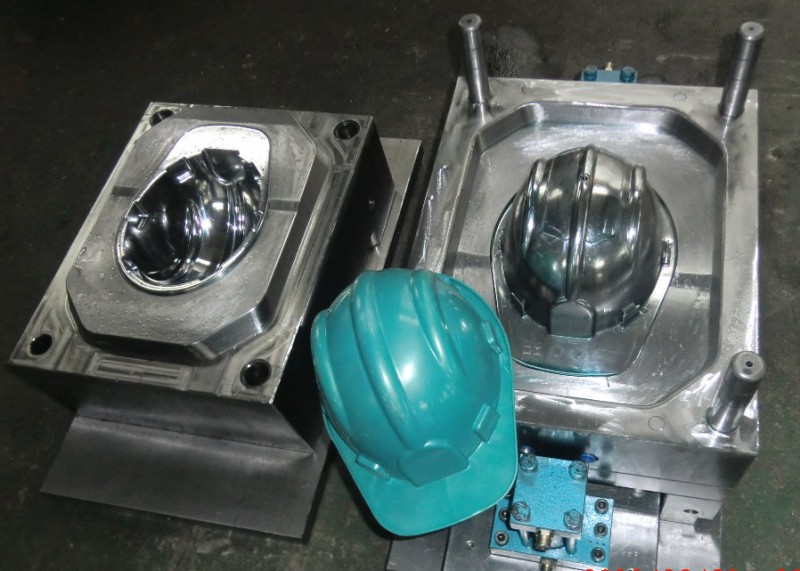
Clamping force keeps the mold closed during injection. A helmet shell mold needs enough clamping force to prevent the mold from opening. If the mold opens slightly, the shell gains flash and uneven wall thickness. Insufficient clamping force also causes dimensional deviation that weakens impact resistance.
Why does a helmet shell mold need high clamping force?
A helmet shell has a large projection area and a thick wall. Molten plastic pushes hard against the mold walls. If clamping force is too low, the mold separates slightly at the parting line. Plastic leaks into the gap and forms flash. The shell also loses wall thickness uniformity. The area near the gate becomes thicker. The area far from the gate becomes thinner. This uneven thickness creates weak points that fail under impact.
What clamping force range covers most helmet shell production?
Uses machines from 250 tons to 750 tons for helmet shells and equips them with PC or ABS specific screws. A single-cavity 450-gram ABS shell runs on a 470-ton machine. Arburg installed a 3500 kN machine for industrial safety helmet shells with a 40-second cycle. A 5 mm thick shell in a research mold required about 1368 kN clamping force. Production shells with larger projection areas need more.
How does Haichen match clamping force to shell impact requirements?
Haichen offers the HCK460 with 4600 kN clamping force. This tonnage covers single-cavity motorcycle helmet shells in the 400-gram to 500-gram range. The machine uses a servo-hydraulic system. The servo system holds injection pressure stable across the cycle. Stable pressure prevents wall thickness drift during long production runs. Haichen reviews shell weight and mold projection area before recommending tonnage. This step avoids both undersized machines that produce flash and oversized machines that degrade material through long residence time.
| HCK460 PLASTIC INJECTION MOLDING MACHINE | ||||
| INJECTION UNIT | ||||
| ITEM | UNIT | A | B | C |
| INJECTION UNIT | ||||
| Screw diameter | mm | 75 | 80 | 85 |
| Screw L/D ratio | L/D | 23.5 | 22.0 | 20.7 |
| Shot volume(theoretical) | cm3 | 1833 | 2086 | 2355 |
| Injiection weight(ps) | g | 1668 | 1898 | 2143 |
| oz | 58.8 | 66.9 | 75.6 | |
| Injection pressure | Bar | 1940 | 1700 | 1512 |
| Injection rate | cm3/s | 457 | 520 | 587 |
| Plasticizing capacity | g/s | 54 | 60 | 71 |
| Screw speed (Max.) | r/min | 140 | ||
| CLAMPING UNIT | ||||
| Clamping force | Kn | 4600 | ||
| Space between tie bars(W×H) | mm | 820×770 | ||
| Platens size | mm | 1180×1130 | ||
| Opening stroke | mm | 810 | ||
| Min.Mold height | mm | 300 | ||
| Max.Mold height | mm | 830 | ||
| Distance between platens(daylight) | mm | 1640 | ||
| Ejector stroke | mm | 220 | ||
| Ejector force | Kn | 120 | ||
| OTHERS | ||||
| Systerm pressure | Bar | 175 | ||
| Pump motor | Kw | 70 | ||
| Heating power | Kw | 41.0 | ||
| Oiltank cubage | L | 700 | ||
| Machine dimension(L×W×H) | m | 8.7×2.0×2.4 | ||
| Machine weight | t | 19.6 | ||
How Do Wall Thickness and Clamping Force Work Together for Impact Performance?
Wall thickness sets the shell’s deformation resistance. Clamping force ensures that thickness stays uniform during molding. A thick wall with uneven thickness performs worse than a thinner uniform wall. Machine selection must match clamping force to shell weight and mold cavity count. Haichen matches HCK460 tonnage to shell weight and recommends screw configurations for PC and ABS.
Why does a thicker shell not always mean better impact protection?
Impact energy absorption depends on how the shell deforms and spreads force. A shell that is too thick transfers more force to the head instead of absorbing it. Research shows that increasing helmet thickness beyond 8 mm does not improve energy absorption efficiency. A 2.5 mm shell with uniform thickness can outperform a 4 mm shell with thin spots. The weak spots fail first and let force through.
How does machine stability support consistent impact test results?
Impact test results vary when wall thickness varies. A machine with stable clamping force and injection pressure produces shells with consistent thickness from the first shot to the last. FCS recommends PC or ABS specific screws to match the material’s flow behavior. A matched screw reduces melt temperature variation. Stable melt temperature keeps the plastic flowing at the same rate into every cavity. Consistent fill produces consistent wall thickness.
How does Haichen help helmet shell manufacturers meet impact standards?
Haichen combines the HCK460 tonnage range with PC and ABS screw configurations. The machine’s servo-hydraulic system maintains stable clamping force during injection. This stability keeps wall thickness uniform across production runs. Haichen also supplies dryers and chillers as part of a complete line. Proper drying prevents material degradation that weakens impact strength. Haichen reviews mold drawings and shell weight before delivery. This review catches clamping force mismatches before production starts.
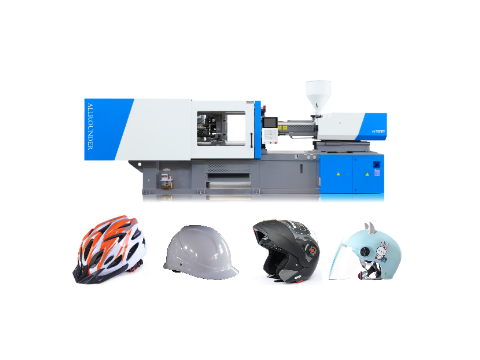
Helmet shell impact performance depends on wall thickness and clamping force together. Wall thickness sets the shell’s deformation resistance. Clamping force keeps that thickness uniform during molding. A 2.5 mm to 4.5 mm wall with uniform thickness performs better than a thick shell with weak spots.
Haichen offers the HCK460 with 4600 kN clamping force. The machine suits single-cavity motorcycle and bike helmet shells. Haichen matches tonnage to shell weight and provides PC and ABS screw configurations. The servo-hydraulic system holds pressure stable across the production run. Haichen reviews mold drawings before delivery to catch clamping force mismatches early.
Contact Haichen for helmet shell injection machine selection. Send your helmet shell weight, wall thickness, and mold cavity count. We will match clamping force and screw configuration to your impact performance requirements.